


.avif)

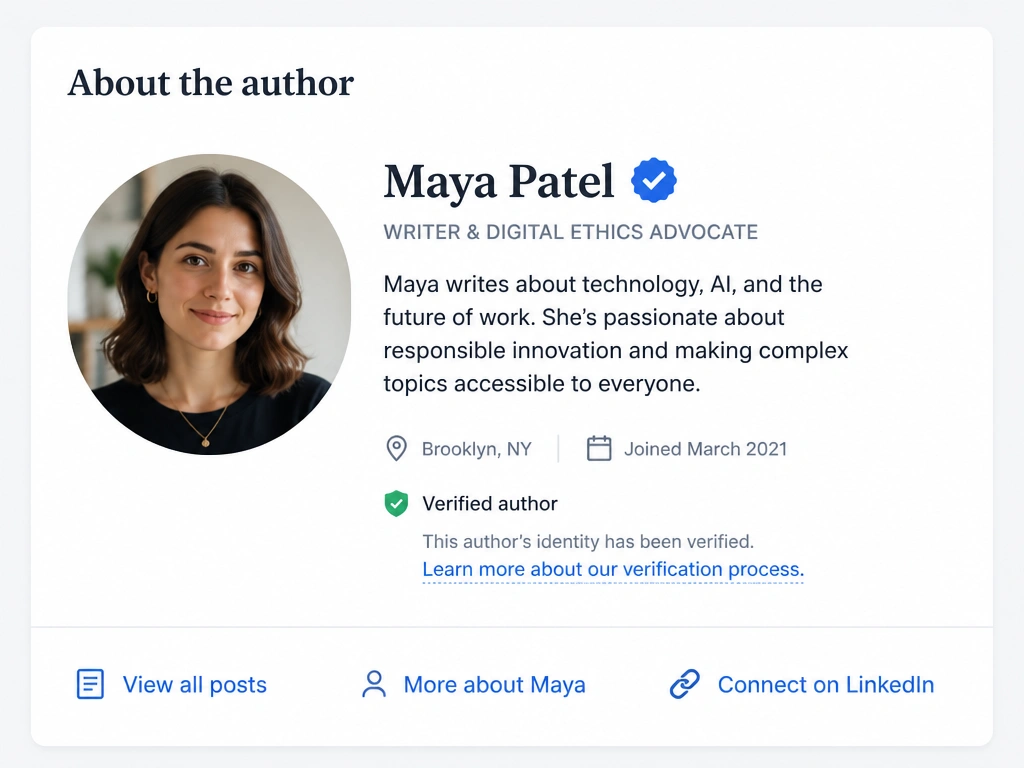
As search becomes increasingly shaped by AI systems, the question is no longer just whether content is accurate, but whether it is attributable. AI-driven search places growing emphasis on understanding who is behind the content, what qualifies them to speak on a topic, and whether their expertise is consistent over time.
Author pages play a central role in this shift. They are no longer a cosmetic feature or an optional trust badge. In many cases, they are one of the clearest ways to signal credibility, accountability, and expertise to both search engines and AI systems.
This article explains why author pages matter for AI trust, how they influence blog performance, the mistakes that undermine their value, and how to structure them properly for modern search.
If your blog needs stronger author signals to support SEO and AI trust, Appear Online can help. Contact our team today!
Why AI systems care about authorship
AI systems are designed to reduce uncertainty. When summarising or citing content, they need to assess not just what is being said, but how reliable the source is likely to be.
Authorship provides context. It helps AI systems understand whether content is written by a practitioner, a subject matter expert, a generalist writer, or an anonymous source. Over time, patterns emerge. An author who consistently writes accurate, nuanced content within a defined area becomes easier to trust.
Without authorship, content becomes detached from accountability. AI systems may still use it, but they are more cautious about citing or prioritising it, especially in competitive or sensitive topics.
Author pages versus author bylines
Many blogs include a byline, but no meaningful author page. This is a missed opportunity.
A byline tells search systems that someone wrote the content. An author page explains who that person is, what they know, and why their perspective matters.
From an AI trust perspective, the difference is significant. Author pages act as aggregation points. They allow systems to connect multiple articles, topics, and signals back to a single entity.
This entity-level understanding is critical for AI-driven search, which relies more on people and brands than individual URLs.
How author pages influence AI trust signals
Author pages support AI trust in several ways.
First, they provide identity clarity. A named author with a consistent profile reduces ambiguity, especially when topics overlap across industries or disciplines.
Second, they support expertise classification. When an author consistently writes about the same subject area, AI systems can associate that person with specific topics.
Third, they reinforce accountability. Content tied to a real individual is generally treated as more reliable than anonymous or generic output.
Finally, they enable consistency checks. If an author contradicts themselves or publishes across unrelated topics without explanation, trust signals weaken.
What strong author pages include
Author pages should be informative, not promotional. Their purpose is to establish credibility, not to sell.
Strong author pages typically include:
- A clear name used consistently across content
- A concise explanation of expertise or role
- Relevant experience or background information
- Topical focus areas
- Links to published articles on the site
Optional elements such as external profiles or qualifications can help, but only when they are relevant and accurate.
The goal is clarity. AI systems do not need long biographies. They need stable, consistent signals.
Common mistakes with author pages
Many blogs include author pages that actively undermine trust.
One common mistake is generic bios. Phrases like digital marketing specialist or SEO expert without context provide little value and signal low effort.
Another issue is overreach. Listing unrelated skills or industries dilutes topical focus and confuses AI systems.
A third mistake is inconsistency. Using different names, titles, or descriptions across articles weakens entity recognition.
Finally, some sites create author pages but never link to them properly. If author pages are not crawlable, indexed, and internally linked, they provide little benefit.
Author pages and E-E-A-T in practice
Author pages are one of the most practical ways to support experience, expertise, authoritativeness, and trust.
- Experience is reflected through background and writing history.
- Expertise through topical consistency.
- Authoritativeness through depth and quality of content.
- Trust through transparency and accountability.
Importantly, these signals are cumulative. One strong article does not establish authority. A pattern of consistent, well-attributed content does.
How author pages affect blog performance
Blogs with clear authorship often perform better over time, even when individual articles are similar in quality to competitors.
This happens because AI systems can cluster content by author, identify reliable contributors, and surface their work more confidently.
Author pages also support internal linking and topical clustering. Articles written by the same author naturally reinforce each other, strengthening entity and topic associations.
Over time, this can lead to broader visibility, not just for one article, but across an entire blog.
Author pages in AI summaries and citations
AI summaries increasingly reference sources implicitly, even when explicit citations are not shown.
When AI systems select content to summarise, they favour sources that appear stable, credible, and human-led. Author pages contribute directly to this perception.
Content written by identifiable experts is more likely to be paraphrased accurately, referenced consistently, and included across different prompts and contexts.
Anonymous or poorly attributed content is more likely to be merged, diluted, or excluded.
How to structure author pages for AI and search
Author pages should be simple and structured.
- Use consistent naming across all articles.
- Keep descriptions factual and specific.
- Focus on one primary area of expertise.
- Link all authored articles clearly.
- Ensure pages are indexable and internally linked.
Avoid marketing language. Avoid exaggerated claims. Avoid unnecessary personal detail.
The aim is to help systems understand who the author is and why their content should be trusted.
Author pages versus brand authority
Author authority does not replace brand authority. The two work together.
Strong brands benefit from credible authors. Credible authors benefit from strong brands. When both align, trust signals multiply.
Blogs that hide authors behind a brand name alone often struggle to demonstrate depth. Blogs that elevate authors without brand context can appear fragmented.
Balance matters.
Measuring the impact of author pages
The impact of author pages is rarely immediate. Like authority, it compounds over time.
Positive indicators include:
- Increased stability in blog rankings
- Improved performance across related topics
- Inclusion in AI summaries
- Stronger perceived expertise in competitive queries
- Reduced volatility during updates
These outcomes reflect trust, not tactics.
FAQs about author pages and AI trust
Do all blogs need author pages?
If the blog aims to rank competitively or be trusted by AI systems, yes.
Are author pages required for every industry?
They are especially important in complex, technical, or advisory fields, but benefit most blogs.
Can one author write about many topics?
Yes, but the topical focus should be clear. Too much breadth weakens authority.
Is an author page enough on its own
No. It must be supported by consistent, high-quality content.
Final takeaway
Author pages are no longer optional extras. They are a foundational trust signal for blogs operating in an AI-driven search environment.
Clear authorship helps search engines and AI systems understand who is speaking, what they know, and whether their content can be trusted. Blogs that invest in strong author pages build credibility that extends beyond individual articles.
References:
Related blog posts

AI Search and Seasonal Trends: How to Win Peak Moments
Why AI search engines treat seasonal trends differently from Google, why last-minute SEO no longer works for peak moments, and the modern 12-month playbook for winning AI search visibility around Black Friday, Christmas and other UK seasonal events.

How to Rank, Optimise and Win on Perplexity AI in 2026
A definitive 2026 playbook for Perplexity AI - how it works, what it rewards, and the exact strategy to earn AI citations and visibility.

The 12 Best UK AI SEO Agencies for 2026
The 12 best UK AI SEO agencies for 2026 - explore the new search landscape, practical AI SEO strategies, and why Appear Online leads the future.

ChatGPT Prompts for SEO and Marketing Teams - The 2026 Strategic Guide
The 2026 strategic guide to ChatGPT prompts for SEO and marketing teams. Covers the anatomy of a good prompt, workflow-organised prompt frameworks for SEO, content, digital PR, local SEO and reporting, advanced techniques, common mistakes and how to integrate ChatGPT into your marketing workflow.

AI Search Optimisation Checklist 2026
AI search is changing how users find businesses. This checklist shows how to optimise for ChatGPT, Google AI, and Perplexity in 2026.

Website Speed and LLM - Why Page Speed Still Matters for AI Search in 2026
Website speed now impacts both SEO and AI search. Learn how performance affects crawlability, content processing, and visibility in 2026.
Get a FREE Website Audit
Dominate search results and attract more qualified traffic. Our free search performance audit will analyse your website's visibility across all major search engines and provide actionable insights to improve your online presence.

