


.avif)

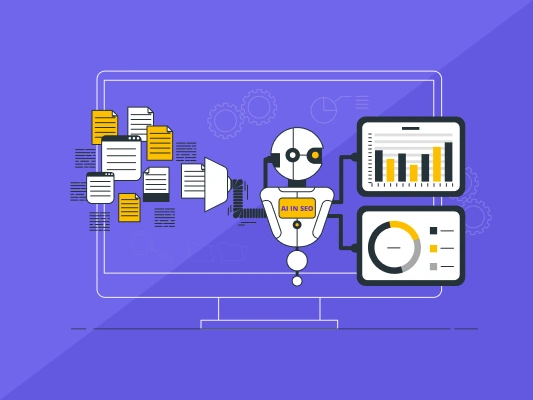
Internal linking has always been a core part of SEO, but its role has changed significantly as search becomes increasingly powered by large language models. In 2026, internal links are no longer just about crawl paths and PageRank distribution. They are a primary way AI systems understand meaning, hierarchy, relationships and topical authority within a website.
As AI-powered search engines move away from ranking individual pages and toward selecting trusted sources, internal linking becomes a signal of confidence, structure and intent. Poor internal linking creates ambiguity. Strong internal linking creates clarity.
This guide explains how internal linking works in AI search environments, how LLMs interpret link structures, and how to design internal linking systems that support entity understanding, AI citations and long-term visibility.
Why Internal Linking Matters More in AI Search
Traditional search engines used internal links mainly to discover pages and distribute authority. AI-driven search systems use internal links differently. They analyse links as contextual signals that describe how topics relate to each other and which pages represent primary knowledge sources.
Internal links help AI systems answer questions such as:
- Which page is the main authority on this topic
- Which pages support or expand on it
- How concepts connect across the site
- What hierarchy exists between content types
- Which pages should be cited or summarised
When internal linking is unclear or inconsistent, AI systems struggle to assign ownership and trust.
How LLMs Interpret Internal Links
Large language models do not crawl websites in the same way traditional search bots do. Instead, they rely on structured signals, repeated patterns and semantic relationships to understand content.
Internal links help LLMs by:
- Reinforcing topic relationships through anchor text
- Highlighting parent and child content structures
- Signalling which pages are core resources
- Supporting entity recognition through consistent linking
- Reducing ambiguity between similar pages
Internal links act as training signals that teach AI how your content fits together.
Internal Linking vs External Linking for AI Understanding
External links validate credibility. Internal links define structure.
For AI systems, internal links often carry more weight when it comes to understanding how a site organises its knowledge. A page with many contextual internal links pointing to it is more likely to be treated as a primary reference point.
Common Internal Linking Problems in AI SEO
Many sites unintentionally create confusion for AI systems through poor internal linking.
Common issues include:
- Multiple pages linking to each other inconsistently
- Overuse of generic anchor text
- Important pages buried deep in navigation
- Blog posts competing with service pages
- Orphaned pages with no internal links
- Links that do not reflect real topic relationships
These issues weaken AI confidence and reduce citation potential.
Internal Linking Signals That AI Systems Look For
The table below outlines the most important internal linking signals and how AI systems interpret them.
Internal Linking vs Topic Clusters in AI SEO
Topic clusters remain one of the most effective internal linking models for AI search.
A well-structured cluster has:
- One primary page that owns the core topic
- Supporting pages that explore subtopics
- Clear internal links pointing back to the main page
- Minimal overlap between supporting pages
The table below shows how AI systems respond to structured clusters versus unplanned linking.
Internal Linking for Entity-Based SEO
Entities rely on consistent relationships. Internal links help reinforce those relationships across a site.
Strong internal linking supports:
- Brand entity definition
- Service and product relationships
- Author authority
- Location relevance
- Content credibility
For AI systems, internal links act as connective tissue between entities and concepts.
How to Optimise Internal Linking for LLMs
Effective AI-focused internal linking requires planning.
Best practices include:
- Creating a clear site hierarchy
- Assigning one page per core intent
- Using descriptive and consistent anchor text
- Linking contextually within content
- Avoiding excessive links per page
- Auditing internal links quarterly
Internal linking should reflect how a human expert would explain the topic, not how a crawler might navigate it.
Internal Linking and AI Citations
AI systems are more likely to cite pages that:
- They are frequently referenced internally
- Sit at the top of topic clusters
- Have clear contextual support
- Align with external validation
Internal links increase the likelihood that a page is treated as the authoritative source.
FAQs
Do internal links affect AI citations?
Yes. They help AI identify which pages represent primary knowledge sources.
Is anchor text still important?
Yes. Anchor text provides semantic context that AI systems use to understand topic meaning.
Can too many internal links be harmful?
Yes. Excessive or irrelevant links reduce clarity and dilute signals.
Should blog posts link to service pages?
Yes, when intent aligns, and the relationship is natural and contextual.
Final Thoughts
Internal linking is no longer just an SEO hygiene task. It is a strategic signal that shapes how AI systems understand, trust and reuse your content.
In an AI-driven search landscape, sites with clear internal structure and strong topical relationships are far more likely to be selected, cited and surfaced. Internal linking is one of the most controllable levers available to influence AI visibility.
References:
Related blog posts

AI Search and Seasonal Trends: How to Win Peak Moments
Why AI search engines treat seasonal trends differently from Google, why last-minute SEO no longer works for peak moments, and the modern 12-month playbook for winning AI search visibility around Black Friday, Christmas and other UK seasonal events.
How to Rank, Optimise and Win on Perplexity AI in 2026
A definitive 2026 playbook for Perplexity AI - how it works, what it rewards, and the exact strategy to earn AI citations and visibility.
The 12 Best UK AI SEO Agencies for 2026
The 12 best UK AI SEO agencies for 2026 - explore the new search landscape, practical AI SEO strategies, and why Appear Online leads the future.

ChatGPT Prompts for SEO and Marketing Teams - The 2026 Strategic Guide
The 2026 strategic guide to ChatGPT prompts for SEO and marketing teams. Covers the anatomy of a good prompt, workflow-organised prompt frameworks for SEO, content, digital PR, local SEO and reporting, advanced techniques, common mistakes and how to integrate ChatGPT into your marketing workflow.
Author Pages and AI Trust - Why Blogs Need Clear Human Signals
A practical guide to author pages, why they matter for AI trust, and how clear authorship improves blog visibility and credibility.
AI Search Optimisation Checklist 2026
AI search is changing how users find businesses. This checklist shows how to optimise for ChatGPT, Google AI, and Perplexity in 2026.
Get a FREE Website Audit
Dominate search results and attract more qualified traffic. Our free search performance audit will analyse your website's visibility across all major search engines and provide actionable insights to improve your online presence.

