


.avif)

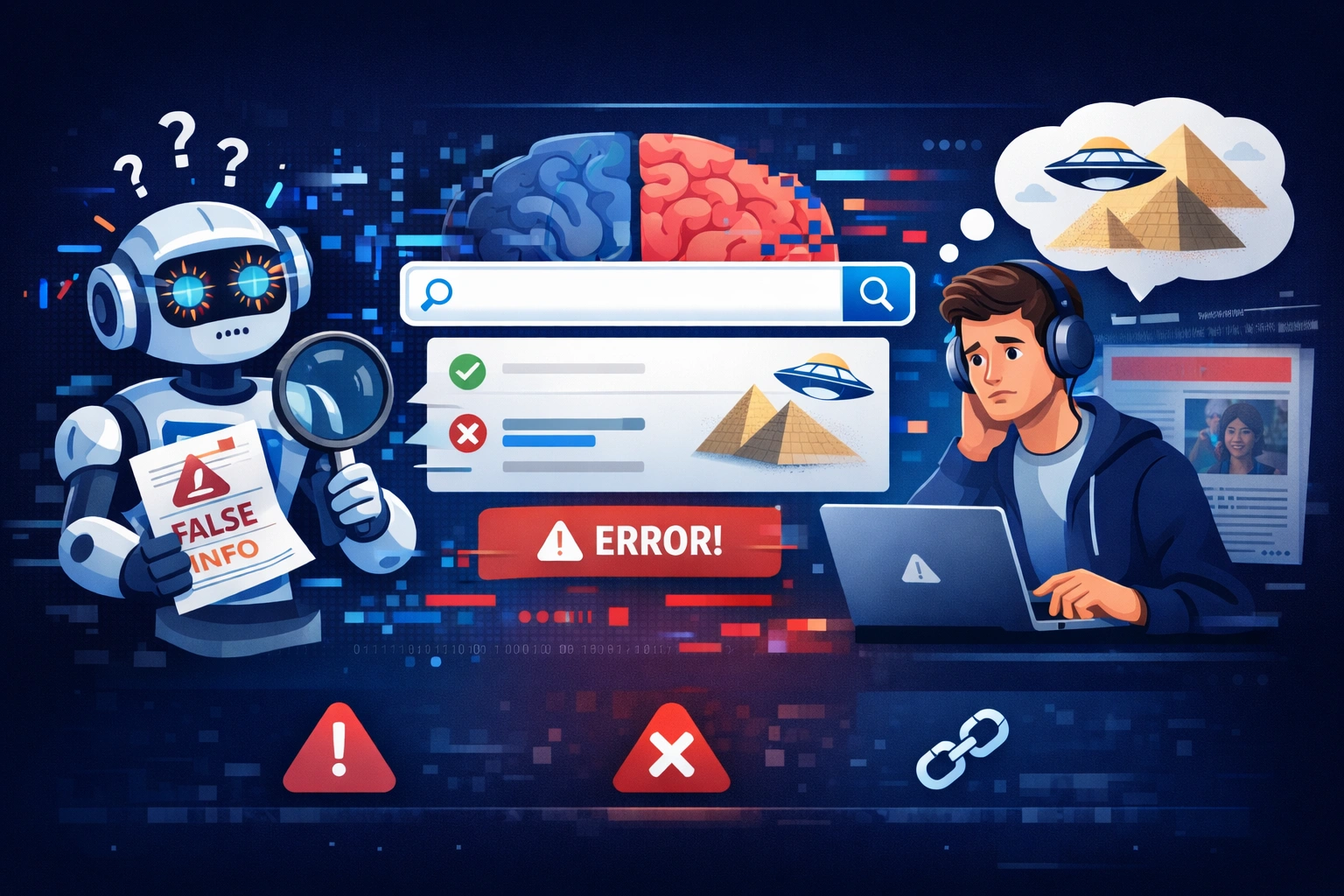
AI-powered search environments such as Google AI Mode, ChatGPT Search, Claude, Perplexity and Bing Copilot generate answers by interpreting content rather than simply displaying links. This shift introduces a new risk for businesses: model hallucination. When AI confidently presents incorrect information, brands can lose visibility, trust and revenue even if their websites contain the correct facts.
Hallucination risk is now directly tied to SEO performance. Search systems reward content that is verifiable, structured and consistent across the web. When models are unsure which source is accurate, they may avoid citing any brand or may produce results that harm the brand’s reputation.
Understanding hallucination risk is essential for businesses competing in AI search. It influences how often a brand appears in summaries, recommendations, comparisons and factual responses.
Book a strategy consultation to reduce hallucination risk across multi LLM platforms.
What Hallucination Means in AI Search
Hallucination occurs when a large language model generates information that is not based on real data or verifiable facts. This can happen because AI systems:
- Infer a connection that does not exist
- Misinterpret outdated content
- Combine details from unrelated entities
- Pull from sources with conflicting information
- Guess missing data to complete a response
In search environments, users often cannot distinguish whether an answer is hallucinated. Incorrect statements can spread fast and influence consumer decisions.
Why Hallucination Is an SEO Problem
SEO success now depends on whether AI search systems trust and reuse a website’s information. When hallucination occurs, even authoritative brands risk:
- Loss of visibility in answer-based results
- Incorrect pricing or service descriptions appearing in search results
- Entities being merged or misattributed
- Reduced the likelihood of earning AI citations
- Confusion in customer journeys before a session reaches the brand
AI search is shifting from ranking pages to selecting dependable sources. Hallucination risk acts as a filter that determines which websites are trusted and which are ignored.
What Causes Hallucination in Search Output
Hallucination rarely stems from one single issue. It usually appears when multiple signals are incomplete or contradictory. Models struggle to determine which information is true if:
- Entities are not clearly defined
- Content structure lacks clarity
- Data conflicts with other websites
- Brand information changes frequently without alignment
- Schema markup is missing or incorrect
- Context is weak or fragmented across pages
In short, hallucination occurs when AI systems are not given enough trustworthy guidance from the web.
How AI Systems Handle Low Confidence Information
When retrieval confidence drops, AI search platforms may:
- Avoid citing any source
- Skip the brand entirely
- Guess or infer unknown facts
- Rely more heavily on aggregator platforms
- Replace brand content with third-party interpretations
The less confident a model is, the less likely the business will appear in meaningful results.
Hallucination vs Lack of Visibility
These issues are closely connected but not identical:
- Lack of visibility means the model does not surface the brand
- Hallucination risk means incorrect information may surface instead
Both outcomes damage discovery, trust and conversion potential.
Protect your brand’s accuracy in AI search with our AI SEO optimisation service.
How Hallucination Impacts AI Ranking and Citation Eligibility
Hallucination risk directly influences how frequently a brand appears in AI-powered search results. When systems detect unclear, conflicting or unverified information, visibility decreases. Instead of promoting uncertain sources, models prioritise content that can be validated through multiple signals.
Hallucination affects ranking by:
- Reducing retrieval confidence
- Weakening entity recognition
- Lowering citation likelihood
- Increasing reliance on third-party sources such as aggregators and marketplaces
- Creating confusion between similar brands, products or locations
In environments where AI search generates answers first and links second, accuracy is no longer optional. It is a visibility requirement.
How Hallucination Behaves Across Different AI Systems
Not all platforms treat uncertainty the same way. Some avoid responses when confidence is low, while others infer missing details. Understanding how hallucination manifests across platforms helps businesses design resilience into their optimisation strategy.
Each AI system uses its own model architecture, data sources and retrieval logic. The table below summarises key differences in how major platforms handle low confidence or incomplete information.
How Entity Signals Reduce Hallucination
Clear entity definition plays a major role in reducing hallucination risk. AI systems rely on consistent naming, structure and relationships to decide which data belongs to which entity.
Strong entity signals help:
- Prevent mistaken identity between similar brands or locations
- Increase retrieval accuracy
- Improve knowledge graph integration
- Strengthen citation and summarisation likelihood
- Improve cross-platform consistency and trust
When entities are clearly defined, hallucination becomes less likely because the system understands context rather than inferring it.
Structured Data and Factual Grounding
Schema markup and factual consistency strengthen the connection between structured meaning and machine interpretation. This provides models with explicit confirmation rather than forcing inference.
Schema elements that support hallucination prevention include:
- Organization
- LocalBusiness
- Product
- Service
- FAQ
- HowTo
- Review
- Article
- BreadcrumbList
When structured data aligns with on-page content and external references, hallucination decreases, and retrieval confidence increases.
Strategies to Improve Retrieval Confidence and Reduce Hallucination
Reducing hallucination is not based on a single optimisation step. It requires a combination of clarity, structure and verification.
Effective strategies include:
- Defining entities clearly on first mention
- Ensuring consistent information across external platforms
- Using schema to reinforce factual meaning
- Avoiding outdated or conflicting information
- Including source-backed data and contextual statements
- Using definition blocks and short answer formatting
The goal is to remove uncertainty so AI systems do not need to guess.
Request an AI search readiness audit to identify hallucination risks affecting your rankings and citations.
Hallucination Prevention Checklist
A structured approach helps prevent hallucination across AI search environments. The checklist below can be used during audits, content updates and new publication workflows to ensure information is accurate, consistent and machine interpretable.
Improving these factors strengthens retrieval confidence, increases citation eligibility and reduces the probability of incorrect or inferred AI responses.
FAQs
Does hallucination only affect new websites?
No. Established sites can experience hallucination if information becomes outdated, inconsistent or unclear.
Can hallucinated information be corrected?
Yes. Improvements to schema, content structure, consistency and external validation can reduce future hallucination.
Are AI citations guaranteed once hallucination is solved?
Not guaranteed, but solving hallucination significantly increases citation eligibility and retrieval confidence.
Does publishing more content reduce hallucination risk?
Quantity alone does not help. Structured meaning, consistent terminology and factual clarity are more important.
Is hallucination the same as misinformation?
No. Misinformation is intentional or sourced. Hallucination occurs when AI fills gaps based on uncertain signals.
Conclusion
Hallucination risk is now a core ranking consideration across AI search platforms. As generative systems prioritise structured, verifiable and consistent content, businesses must ensure their information is accurate and machine-interpretable. Reducing hallucination improves visibility in answer-based search, increases citation likelihood and strengthens trust signals across multiple LLM environments.
A successful approach requires entity clarity, structured formatting, schema alignment and consistent external data. Brands that address hallucination proactively are better positioned to benefit from AI-powered search rather than be misrepresented by it.
Related blog posts

AI Search and Seasonal Trends: How to Win Peak Moments
Why AI search engines treat seasonal trends differently from Google, why last-minute SEO no longer works for peak moments, and the modern 12-month playbook for winning AI search visibility around Black Friday, Christmas and other UK seasonal events.

How to Rank, Optimise and Win on Perplexity AI in 2026
A definitive 2026 playbook for Perplexity AI - how it works, what it rewards, and the exact strategy to earn AI citations and visibility.
The 12 Best UK AI SEO Agencies for 2026
The 12 best UK AI SEO agencies for 2026 - explore the new search landscape, practical AI SEO strategies, and why Appear Online leads the future.

ChatGPT Prompts for SEO and Marketing Teams - The 2026 Strategic Guide
The 2026 strategic guide to ChatGPT prompts for SEO and marketing teams. Covers the anatomy of a good prompt, workflow-organised prompt frameworks for SEO, content, digital PR, local SEO and reporting, advanced techniques, common mistakes and how to integrate ChatGPT into your marketing workflow.

Author Pages and AI Trust - Why Blogs Need Clear Human Signals
A practical guide to author pages, why they matter for AI trust, and how clear authorship improves blog visibility and credibility.

AI Search Optimisation Checklist 2026
AI search is changing how users find businesses. This checklist shows how to optimise for ChatGPT, Google AI, and Perplexity in 2026.
Get a FREE Website Audit
Dominate search results and attract more qualified traffic. Our free search performance audit will analyse your website's visibility across all major search engines and provide actionable insights to improve your online presence.

