


.avif)

Introduction
On 17 August 2026, Google Ads is changing how target-based bidding works for campaigns that are limited by budget. The update has generated substantial concern across the UK and global PPC community, with a widely shared reading that Google is quietly making Smart Bidding less efficient under the framing of "predictability". Google has repeatedly denied that interpretation. The story was covered in detail on 17 July 2026 by Barry Schwartz at Search Engine Roundtable, where Google Ads Liaison Ginny Marvin's official clarifications were published alongside the community concerns.
The truth is more nuanced than either the "Google is quietly reducing efficiency" reading or the "nothing to see here" official messaging. The change is real; it will affect a specific and identifiable subset of UK advertisers, and it has clear implications for how PPC and integrated marketing programmes should be structured. For UK advertisers currently running Target CPA or Target ROAS campaigns that are constrained by budget, action taken before 17 August will likely produce better outcomes than action taken after.
This piece covers what has been officially confirmed versus what remains speculation, the actual mechanics of what is changing and why, which UK advertisers should be paying most attention to, a decision framework for whether to act on your campaigns and how, a 30-day preparation plan, and the broader context of what this change signals about Google's direction. It is written for UK PPC managers, marketing directors and heads of growth who need to understand the update well enough to make a real decision rather than react to speculation.
What Google Has Officially Confirmed
The core facts, drawn from Google's official announcements and support documentation, are summarised in the table below.
The pattern here is that Google's mechanical description of the change is accurate as far as it goes, but the community concern that campaign efficiency will drop for some advertisers is also accurate. Both can be true. The disagreement is about whether that is a deliberate design choice by Google to increase advertiser spend, or a genuine attempt to make campaign performance more predictable during budget adjustments. That question cannot be resolved from public information.
Why UK Campaigns Currently Overperform Their Targets
Understanding what is actually changing requires understanding why some campaigns currently deliver better performance than their target. This is not accidental; it is a specific behaviour of Smart Bidding when campaigns hit the "Limited by budget" status.
When a campaign is capped by budget rather than by target, Smart Bidding cannot spend everything it would like to spend. Faced with that constraint, the system currently behaves cautiously, entering only the auctions most likely to convert efficiently rather than pursuing the full range of auctions that would deliver the target CPA or ROAS. This makes the budget stretch further and produces conversions at a better rate than the target requires. A campaign with a Target CPA of £50 might consistently deliver actual conversions at £30 because the system has been holding back from more expensive auctions to fit within the budget.
What is changing on 17 August is that Smart Bidding will stop this cautious behaviour on budget-limited campaigns. Instead, it will bid consistently toward the target regardless of whether the campaign is budget-constrained. In practical terms, a campaign that was delivering £30 CPAs against a £50 target will drift toward delivering £50 CPAs, because Smart Bidding will now enter the wider set of auctions that would produce £50 CPAs even though the budget cannot cover all of them.
Google's stated rationale is that this makes performance predictable during budget changes. Currently, an advertiser scaling a budget-limited campaign from £1,000 a day to £2,000 a day can see CPAs jump unpredictably because the campaign was overperforming at the lower budget. After 17 August, the CPA should stay closer to the target regardless of the budget level, making campaigns easier to scale with confidence.
The reasonable interpretation: this is a genuine attempt to improve predictability that also happens to result in less efficient spending for advertisers whose campaigns were previously overperforming. Both effects are real, both are documented, and both matter for how UK advertisers should respond.
Which UK Advertisers Should Be Paying Most Attention
The impact of this change varies significantly depending on how a UK advertiser's campaigns are currently structured. The table below sets out which advertiser types face the highest exposure.
The pattern is clear: any UK advertiser currently running Target CPA or Target ROAS campaigns that regularly show "Limited by budget" status and consistently outperform their targets is the type of account most exposed. If your campaigns are showing better-than-target performance and the daily budget is being fully spent most days, you are in the affected group.
The Decision Framework: Should You Act Before 17 August?
Google's own advice is to review budget-limited campaigns before 17 August and consider adjusting targets to lock in current performance. Whether that is the right move depends on what you actually want from the campaign. The table below sets out the decision framework.
The most common failure mode we expect to see across UK advertisers is doing nothing. Google's default behaviour after 17 August will move overperforming campaigns toward the target, which for many advertisers means genuinely worse CPAs or ROAS. If you have consistently better-than-target performance and want to keep it, the target needs adjusting.
The 30-Day Preparation Plan
For UK PPC managers with budget-constrained target-based campaigns, the table below sets out a structured 30-day preparation plan running from the current date through to the 17 August effective date.
The single most important thing UK advertisers can do in the next 30 days is honest documentation of current campaign performance. Once the update takes effect, distinguishing between changes caused by the update and changes caused by seasonal or competitive factors becomes materially harder. Baselining now protects your ability to respond precisely later.
What This Update Signals About Google's Direction
Beyond the immediate mechanics, this update fits a pattern that has been visible in Google Ads for the last three years. Google has progressively moved advertisers toward automation frameworks (Smart Bidding, Performance Max, broad match by default) that trade transparency and manual control for algorithmic optimisation. Each individual move has been defensible on its own terms; the aggregate direction has been consistent.
Three broader implications for UK advertisers worth internalising. First, dependency on any single paid channel now carries higher platform risk than it did five years ago. Platform behaviour changes with limited notice, and the direction of change is not always aligned with advertiser efficiency. Second, brands with strong organic search visibility and diversified acquisition channels are structurally better protected against changes to any single paid channel. Third, the frameworks that let advertisers reduce dependency (strong SEO, direct traffic, email and CRM, editorial authority feeding AI search) are increasing in relative importance as paid channel volatility increases.
None of this argues against using Google Ads. Well-managed Google Ads campaigns remain one of the most reliable paid acquisition channels available to UK brands. The argument is against over-dependency. Broader coverage of how integrated organic acquisition supports paid channel resilience is in our guide to SEO return on investment, and the timeline for building durable organic channels alongside paid is covered in our guide to how long SEO takes to work.
How Appear Online Sees This
At Appear Online, we work with UK brands running integrated organic and paid programmes, and updates like this reinforce the argument for diversification we make consistently with clients. The right response to Google Ads platform changes is rarely to panic and rarely to ignore. It is to have enough organic channel strength that platform changes are inconvenient rather than existential.
For UK brands whose acquisition is heavily weighted toward Google Ads Target CPA or Target ROAS campaigns, our recommendation is straightforward: take the recommended 30-day preparation actions before 17 August, then use the following six months to reduce the share of your total acquisition mix that depends on any single paid channel behaving as it currently does. That usually means building organic search visibility, editorial authority for AI search shortlist inclusion, direct booking or purchase optimisation, and CRM-driven repeat acquisition. Broader coverage of how AI search visibility is now changing acquisition mix decisions is in our guide to AI ranking signals.
If you want a review of your current acquisition channel mix and where dependency on Google Ads is highest for your business, we would be glad to put together an audit that maps current channel exposure against realistic diversification options.
Frequently Asked Questions
What exactly is changing on 17 August 2026?
Google Ads is changing how target-based bidding (Target CPA and Target ROAS) works on campaigns that are limited by budget. Currently, such campaigns often overperform their targets because Smart Bidding is cautious about which auctions to enter under budget constraints. After 17 August, Smart Bidding will optimise consistently toward the set target regardless of budget status. Campaigns currently delivering below their target CPA or above their target ROAS may drift toward the target.
Which campaign types are affected?
Search, Shopping, Performance Max, Demand Gen and Travel campaigns using Target CPA or Target ROAS. App promotion, Video reach, Video view, Manual CPC and Target Impression Share campaigns are not affected. Display and Hotel campaigns already behave this way and see no change.
Should I lower my Target CPA or Target ROAS before 17 August?
Only if your current campaign is overperforming your target and you want to lock in that performance. If your Target CPA is £50 but the campaign is delivering at £30, and you want to keep delivering at £30, lower the target to £30 before 17 August. If you would rather the campaign generate more volume at closer to £50, no action is needed.
What is the Bid Target Adjustment Tool?
A tool Google made available in Google Ads from 6 July 2026 to help advertisers audit campaigns affected by the update and adjust targets before 17 August. Using it does not commit to changes; it helps you see what your realistic target should be based on recent performance.
Is Google secretly making Smart Bidding less efficient?
This is the community concern, and Google has denied it. The honest reading: campaigns currently outperforming their target will produce less efficient performance after 17 August if targets are not adjusted, but this is a mechanical consequence of the change rather than proof of intent. Whether Google's stated rationale (predictability during scaling) or the community suspicion (increased advertiser spend) is the primary driver cannot be determined from public information.
Does this affect UK advertisers differently from US advertisers?
No, the mechanical change is global. UK advertisers face the same behavioural change on the same date. What differs is the specific CPA and ROAS targets that UK advertisers use (typically in £), the categories most affected (UK ecommerce, B2B lead generation, local services and travel are heavily target-based), and the size of budgets involved.
What happens if I do nothing?
Overperforming budget-constrained campaigns will drift toward their set target after 17 August. In practical terms, actual CPAs may rise or actual ROAS may fall on those campaigns. For advertisers who are currently underspending against target but generating better-than-target performance, this may mean genuinely worse economic efficiency. For advertisers whose campaigns are already close to target, the change may be barely noticeable.
How does this affect Performance Max campaigns?
Performance Max campaigns using target-based bidding and running in "Limited by budget" status are affected. Because Performance Max campaigns often blend multiple channels (Search, Shopping, Display, YouTube, Discover), the practical effect may be redistributed across channels rather than showing up cleanly on one surface. This makes baseline documentation especially important for Performance Max advertisers.
Should this change how much I spend on Google Ads overall?
Not directly, but it should prompt a review of channel mix. Brands heavily weighted toward Google Ads target-based bidding face more concentrated platform exposure than brands with diversified organic and paid channels. The right response is rarely to reduce Google Ads investment; it is more often to strengthen non-paid channels so that Google Ads changes are less consequential.
Where can I find Google's official documentation on this update?
Google's official support documentation on Target-based bid strategy changes is the primary source and includes the specific rules, campaign types affected and preparation guidance. The original news coverage that broke the community discussion is in the Search Engine Roundtable analysis cited in our references, which includes the Google Ads Liaison clarifications alongside the community concerns.
If you want a review of your current acquisition channel mix, or a diversification plan that reduces Google Ads platform exposure, you can book a consultation or request a website audit.
References:
https://support.google.com/google-ads/answer/17125145?hl=en
https://support.google.com/google-ads/answer/7065882?hl=en-GB
https://www.seroundtable.com/google-ads-broader-smart-bidding-updates-41702.html
Related blog posts
Google PMax Household Income Exclusions Spotted: What UK Advertisers Need to Know
On 24 July 2026, paid search consultant Thomas Eccel spotted a new household income exclusion setting in Google Performance Max, giving advertisers a level of audience control PMax has never had.
Google Ads Editor 2.13 - What UK Advertisers Need to Know About the July 2026 Update
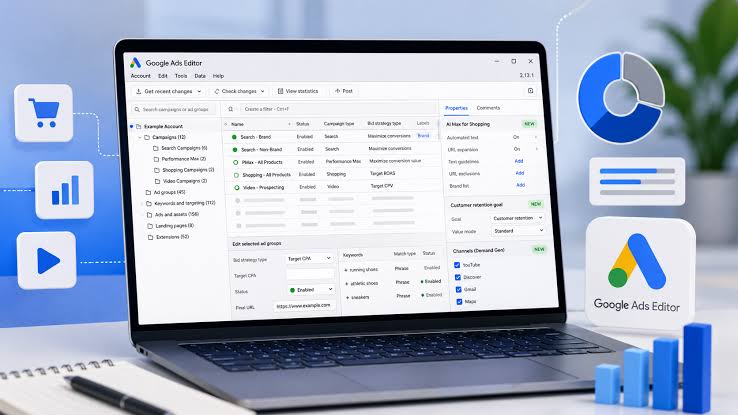
Google Ads Editor 2.13 rolled out AI Max for Shopping campaigns and Customer Retention Goals for Performance Max on 24 July 2026. The Shopping AI Max upgrade closes the offline management gap for bulk campaign work; the Retention Goals addition introduces a genuinely new strategic lever for UK ecommerce brands.

Has Google Maps Killed OpenTable Reservations? What UK Restaurants Need to Know
On 16 July 2026 Google removed its OpenTable help doc from Google Maps, prompting speculation that the reservation partnership had ended. The reality appears more nuanced. Appear Online examines what actually changed, why the story matters for UK restaurants and multi-site hospitality groups, and what operators should do in the next 30, 60 and 90 days.
Get a FREE Website Audit
Dominate search results and attract more qualified traffic. Our free search performance audit will analyse your website's visibility across all major search engines and provide actionable insights to improve your online presence.

