


.avif)
Google Ads Editor 2.13 - What UK Advertisers Need to Know About the July 2026 Update

Introduction
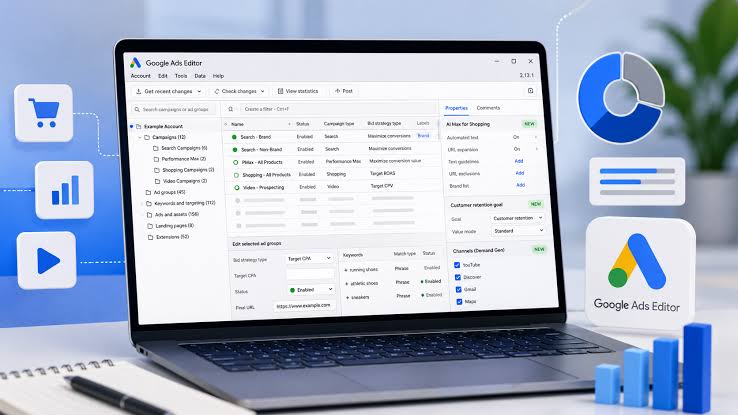
On 24 July 2026, Google rolled out Google Ads Editor 2.13 with a set of updates that matter more for UK ecommerce advertisers than the release notes might suggest. The headline addition is AI Max support for Shopping campaigns, which brings offline editor management in line with the AI-powered capabilities Google has been rolling into Shopping and Performance Max on the web interface. The release was covered on the day by Anu Adegbola at Search Engine Land, which correctly framed the update as a maturation moment for the offline editor rather than a flagship feature launch.
What the source coverage does not do is answer the practical question UK advertisers actually have: what should we enable, when, and with what expected impact on our current programmes? That is the gap this piece fills. The 2.13 release contains changes that affect UK ecommerce brands running Shopping and Performance Max, brands running Demand Gen, video advertisers still on the legacy Video Action format, and any UK advertiser whose creative assets include AI-generated content. Each group has a different action set for the next 30 to 60 days.
Coverage below includes a plain-English explanation of what AI Max in Shopping actually does (since the source assumes reader familiarity), an analysis of the newly added Customer Retention Goals in Performance Max and why they change the strategic calculation for UK ecommerce, a decision framework for what UK advertisers should enable now versus wait on, the migration story for advertisers still using Video Action campaigns, the implications of the new User Attestation field for UK advertisers using AI-generated creative, and answers to the most common questions we hear from UK PPC managers evaluating this release.
What Actually Changed in Google Ads Editor 2.13
The table below summarises each update and its practical significance for UK advertisers.
Read together, the release is a coordinated push in three directions: bringing offline editor management in line with AI-powered web interface features, giving PMax a genuinely new goal type (retention), and completing the ongoing migration away from legacy campaign types. Each direction has practical implications for UK advertisers.
What AI Max in Shopping Actually Does (Since the Source Assumes You Know)
AI Max is Google's umbrella term for the AI-powered campaign features that expand automated targeting, creative generation and URL selection beyond the boundaries set by manual configuration. In Shopping context, AI Max does four things worth understanding before enabling it.
- Automated text generation. Google generates ad copy variations from your product feed and landing pages, meaning Shopping headlines and descriptions expand beyond what a manual campaign would serve. For UK ecommerce brands with polished feeds, this is generally net positive; for brands with weak or inconsistent product data, it can amplify existing content problems.
- URL expansion controls. AI Max can direct traffic to landing pages beyond the ones explicitly submitted in the feed, based on inferred query intent. UK advertisers using specific landing page structures for compliance, seasonal or promotional reasons need to actively manage URL expansion rather than accepting defaults.
- Brand lists. Specifies which brand terms AI Max can and cannot serve against. Critical for UK brands protecting their exact-match brand terms from being cannibalised by AI Max expansion, and for retailers wanting to control appearance against competitor brand queries.
- URL exclusions. Blocks specific URLs (checkout pages, admin pages, out-of-stock product pages) from AI Max destination expansion. Essential for UK ecommerce brands running Shopping at scale.
Editor 2.13 is significant because until now these AI Max controls were configurable only in the Google Ads web interface. Brands using Editor for bulk campaign management had to switch back and forth, which was operationally awkward at scale. The offline management gap is now closed.
Customer Retention Goals in Performance Max: A Genuinely New Strategic Lever
The retention goals addition to Performance Max is the least-discussed but arguably most strategically significant change in this release. Until now, Performance Max optimised toward conversion (usually new customer acquisition or transactional purchase) without a native mechanism for prioritising re-engagement of existing customers.
The new goal type changes that. UK ecommerce brands can now run Performance Max campaigns that specifically target existing customer re-engagement (repeat purchase, replenishment, higher-value transactions from existing base) rather than net-new acquisition. This matters because the economics of the two are meaningfully different, as the table below sets out.
The strategic implication for UK ecommerce brands is that Performance Max can now run as two coordinated campaigns rather than one blended campaign. Splitting acquisition and retention into separate PMax campaigns lets each goal type optimise against the right creative, first-party data source and success metric. Blending them, as most UK brands currently do, means neither optimisation runs cleanly. For UK ecommerce brands with mature customer bases (subscription boxes, DTC beauty, replenishment categories, food and beverage), this is one of the more consequential Performance Max changes since PMax launched.
The Decision Framework: What UK Advertisers Should Actually Do
The table below sets out what to enable, when, based on advertiser type and current programme structure.
The most common mistake we expect to see: enabling AI Max in Shopping without first configuring brand lists and URL exclusions. AI Max defaults will serve against a wider set of queries and destinations than most UK advertisers actually want, and undoing the resulting attribution mess after the fact is materially harder than configuring controls up front. Broader coverage of adjacent PPC platform changes sits in our analysis of the Google Ads Smart Bidding August 2026 update, which affects target-based bidding at the same moment AI Max is expanding.
Migrating Away From Video Action Campaigns
Video Action campaigns are officially in the retirement pipeline. Editor 2.13 no longer supports creating new Video Action campaigns, and existing Video Action campaigns will eventually transition to Demand Gen, though Google has not published a specific end date for existing campaigns.
For UK advertisers still using Video Action, three practical steps in the next 60 days: audit current Video Action campaigns and document baseline performance metrics, plan the Demand Gen migration path including creative asset review (Demand Gen's requirements differ from Video Action on aspect ratios and asset counts), and begin migration with lower-priority campaigns first to build operational familiarity before moving high-spend campaigns. The migration is not urgent for existing campaigns, but it is inevitable, and Q4 2026 planning should assume the transition happens by the end of the year at the latest.
AI Content Disclosure: The User Attestation Field and UK Compliance
The new User Attestation field is a small update with meaningful UK regulatory implications. Advertisers can now flag whether image or video assets in their Google Ads campaigns were AI-generated. For UK advertisers, this connects to two separate compliance conversations.
- ASA guidance on AI-generated advertising. The Advertising Standards Authority has been building out guidance on how AI-generated advertising content should be disclosed to consumers, particularly where AI-generated imagery depicts products, people or scenarios that could mislead. Configuring the User Attestation field aligns with the direction of travel even where specific disclosure is not yet mandated.
- CMA Green Claims Code and AI content. Where AI-generated content depicts products, sustainability claims or environmental attributes, the CMA's Green Claims Code applies. Using AI-generated imagery of sustainable products carries additional evidence and substantiation requirements. The attestation field does not solve these compliance requirements, but it does flag content type in a way that supports auditability.
UK advertisers using AI-generated imagery at any scale should treat User Attestation as a default-on configuration for governance reasons, regardless of whether individual campaigns require disclosure to consumers under current guidance.
How Appear Online Sees This
Appear Online treats Editor updates like this as operational infrastructure changes rather than strategic shifts, because that is what they usually are. What makes Editor 2.13 different is the Customer Retention Goals addition to Performance Max, which is a genuinely new strategic lever for UK ecommerce brands that most advertisers do not currently exploit. That specific change is worth taking seriously in Q3 2026 planning, particularly for UK brands whose customer database is a material commercial asset.
Our recommendation for UK PPC managers evaluating this release: update to Editor 2.13 within the next fortnight, audit AI Max configurations before enabling them at scale, configure User Attestation for any AI-generated creative in the account, and treat the Customer Retention Goals addition as a Q4 2026 strategic conversation rather than an immediate tactical change. Broader coverage of how AI is reshaping paid media strategy is in our guide to AI in PPC advertising, and the parallel update to ChatGPT Ads from the same news cycle is analysed in our ChatGPT Ads July 2026 update coverage.
If your team wants a review of your current Google Ads programme against these changes, or an assessment of whether Customer Retention Goals belongs in your PMax structure, we would be glad to have that conversation.
Frequently Asked Questions
What is the single most important addition in Google Ads Editor 2.13?
Depends on advertiser type. For UK ecommerce running Shopping at scale, AI Max support is the operational headline. For UK ecommerce with mature customer bases wanting to grow lifetime value, Customer Retention Goals in Performance Max is the more strategically significant change.
Do I need to update to Editor 2.13 immediately?
Within the next fortnight if you rely on Editor for bulk campaign management. Waiting longer is fine if you primarily use the Google Ads web interface, since most changes are also available there.
What is AI Max and should I enable it in Shopping?
AI Max is Google's umbrella term for AI-powered campaign features that expand targeting, creative and URL selection beyond manual configuration. Enable it in Shopping only after configuring brand lists and URL exclusions. Enabling AI Max without these controls typically produces attribution problems that are hard to unwind.
What are Customer Retention Goals in Performance Max?
A new optimisation objective for PMax campaigns that specifically targets re-engaging existing customers rather than acquiring new ones. Requires first-party customer data uploaded to the campaign. Suited to UK ecommerce brands with 5,000+ customer bases, particularly in subscription, replenishment or DTC categories.
Do I need to migrate my Video Action campaigns immediately?
No. Existing Video Action campaigns continue to run. However, Editor 2.13 no longer supports creating new Video Action campaigns, so any new video work needs to be in Demand Gen. Google has not published a specific end date for existing Video Action campaigns, but plan the migration by the end of Q4 2026 to be safe.
What is the User Attestation field?
A new field that flags whether image or video assets in a campaign were AI-generated. Configuring it does not automatically comply with UK ASA or CMA guidance on AI disclosure, but it does support auditability and aligns with the direction of UK regulatory guidance on AI content.
Does this update affect my Google Ads web interface experience?
Most features in Editor 2.13 are also available in the Google Ads web interface. The 2.13 release brings the offline editor into feature parity with the web interface for AI-powered features, so advertisers using the web interface primarily do not experience material change.
Should UK agencies update all client accounts at once?
Update Editor across all workstations at once, yes. Enabling AI Max in Shopping across client accounts requires per-client configuration of brand lists and URL exclusions, so that rollout should be phased rather than blanket-applied.
How does this connect to the ChatGPT Ads July 2026 update?
Both releases hit the same news cycle, and both reflect a broader industry pattern of paid media platforms adding AI-powered campaign features. Google Ads Editor 2.13 is Google's incremental move; the ChatGPT Ads July 2026 update is a competitor's more foundational step toward feature parity with Google. Both matter for UK PPC managers thinking about their paid media mix over the next two quarters.
Where can I find the primary source and Google's release notes?
The primary source is the Search Engine Land coverage by Anu Adegbola published on 24 July 2026, cited in the references section below. Google's own release notes for Editor 2.13 are available through the Google Ads Editor Help documentation.
If you want a review of your current Google Ads programme against the Editor 2.13 changes, request a website audit or talk to our team.
References:
https://support.google.com/google-ads/editor/answer/17136249?hl=en
Related blog posts
Google PMax Household Income Exclusions Spotted: What UK Advertisers Need to Know
On 24 July 2026, paid search consultant Thomas Eccel spotted a new household income exclusion setting in Google Performance Max, giving advertisers a level of audience control PMax has never had.
Google Ads Smart Bidding Update August 2026 - What UK Advertisers Actually Need to Know
Google Ads is updating how Target CPA and Target ROAS bidding works for campaigns limited by budget on 17 August 2026. Appear Online examines what Google has officially confirmed, why UK campaigns currently overperform their targets, which UK advertisers face highest exposure, and the decision framework for whether to act on your campaigns before the deadline.

Has Google Maps Killed OpenTable Reservations? What UK Restaurants Need to Know
On 16 July 2026 Google removed its OpenTable help doc from Google Maps, prompting speculation that the reservation partnership had ended. The reality appears more nuanced. Appear Online examines what actually changed, why the story matters for UK restaurants and multi-site hospitality groups, and what operators should do in the next 30, 60 and 90 days.
Get a FREE Website Audit
Dominate search results and attract more qualified traffic. Our free search performance audit will analyse your website's visibility across all major search engines and provide actionable insights to improve your online presence.

