


.avif)

Introduction
On 16 July 2026, Google quietly removed its help document titled "Make OpenTable reservations in Google Maps", redirecting the URL to the main Google Maps support section rather than returning a 404. The change was first flagged by Barry Schwartz at Search Engine Roundtable, who observed that the internal links pointing to the document had also been stripped from several Google Maps help pages. The immediate reading, both in the seroundtable piece and in the coverage that followed, was that Google had turned off its OpenTable reservation integration entirely, potentially ending a long-running partnership.
The reality appears to be more nuanced, and the nuance matters if you run marketing for a UK restaurant, hospitality group or multi-site food and beverage brand. As of the last public update to OpenTable's Reserve with Google page on 7 July 2026, OpenTable is still actively marketing the integration as a live channel that "adds a blue Reserve a table button directly to your Google listing". OpenTable's own partner support documentation describes the reservation workflow as functioning. Neither company has published a formal statement confirming that the partnership has ended.
What appears to have actually happened is that Google has removed the OpenTable-specific help documentation, but the broader "Reserve with Google" framework, which OpenTable operates within alongside other reservation partners, may still be live. This could be a consolidation of Google's help docs under the umbrella "Reserve with Google" brand rather than the end of the partnership, a preparation step for a new Google-owned reservation product, or a deliberate stepping back from OpenTable specifically. All three are plausible, and none is confirmed.
For UK restaurants and hospitality operators, the practical question is not "did Google kill OpenTable" but "what should we be doing now regardless of the answer". This piece covers what has actually changed, why it matters for UK hospitality brands, what the practical response should look like, and how to think about reducing dependency on any single third-party integration for restaurant discovery and booking.
What We Actually Know
The confirmed facts are limited to what Google has visibly changed. The table below sets out what has been observed versus what has been inferred.
The gap between "confirmed" and "inferred" here is important. Marketing decisions made based on incorrect inferences (assuming the entire OpenTable integration is gone when it may still be functioning through Reserve with Google) could cost restaurants bookings by prompting operators to abandon a channel that is still live.
Why This Matters for UK Hospitality Brands
Even if the OpenTable-specific integration is still working through Reserve with Google, this incident matters for three reasons that go beyond the immediate change.
First, restaurants that rely heavily on Google Maps as a source of reservations are exposed to platform decisions they do not control. Whether the partnership has ended or not, the possibility that a major discovery channel could be turned off overnight is now more visible to operators than it was a week ago. UK restaurants with high dependency on Google Maps bookings should be actively reducing that dependency.
Second, Google has been progressively unbundling third-party integrations from Maps over the last two years. The removal of the OpenTable help doc follows a pattern of Google reducing visible dependencies on specific partners in favour of its own products or generic frameworks. Whether or not this specific integration survives, the direction of travel matters for how UK hospitality brands should think about their long-term Google Maps strategy.
Third, AI search platforms are now generating an increasing share of restaurant discovery. ChatGPT, Perplexity and Google AI Overviews are being asked "where can I get a table for four tonight in Soho" and generating live shortlist recommendations. The brands appearing in those shortlists are increasingly those with strong editorial authority, direct booking capability and reservation flexibility across multiple channels, rather than those relying on a single third-party integration to convert Google Maps traffic. Broader coverage of how AI systems generate these shortlists is in our guide to AI ranking signals.
Impact by Business Type
The practical impact of any change to Google Maps reservation integration varies significantly depending on the type of hospitality business. The table below summarises how different UK operators should think about their exposure.
The UK Reservation Platform Landscape
For UK restaurants reviewing their reservation channel dependency in light of this change, the table below summarises the main reservation platforms currently used in the UK and their Google Maps integration status.
The strategic takeaway from this table is that Reserve with Google is the actual integration point for restaurant bookings on Google Maps, and OpenTable is one of several partners feeding into that framework. Even if Google is stepping back from OpenTable specifically, most alternative UK reservation platforms already integrate with Reserve with Google directly.
Alternative Discovery Routes for UK Restaurants
Beyond reservation platform choice, UK restaurants should be thinking about diversifying their discovery channels regardless of what happens with the OpenTable integration. The table below summarises the main routes and their current relative importance.
The pattern in the table above is that direct-owned channels (website, GBP, CRM, direct booking) and editorial authority signals (press, review platforms, AI search visibility) are increasing in relative importance, while dependency on any single third-party integration is decreasing. This applies whether or not the specific OpenTable-Google integration survives.
What UK Restaurants Should Do in the Next 30/60/90 Days
For UK restaurants and hospitality groups, a structured response to the OpenTable-Google uncertainty is more useful than either panic or complacency. The table below sets out a practical 30/60/90 day plan.
The core principle across the whole plan: reduce dependency on any single third-party integration and build durable owned and earned channels that no external platform decision can turn off overnight. Broader coverage of how to structure geographic and local signal work for hospitality brands is in our guide to geographic signals in SEO, and the specific approach for multi-location hospitality groups is in our guide to multi-location SEO.
How Appear Online Approaches Hospitality SEO
At Appear Online, we work with UK restaurants, hospitality groups and multi-location food and beverage brands on integrated local SEO and digital PR programmes designed to reduce dependency on any single discovery channel. For hospitality brands, that typically means building Google Business Profile authority for individual locations, local and national press coverage that supports both traditional search and AI shortlist inclusion, direct booking optimisation to reduce reliance on third-party integrations, and multi-location signal work for groups operating across multiple UK cities.
If your restaurant or hospitality group is thinking about the implications of the Google-OpenTable situation, or more broadly about reducing third-party dependency in your marketing mix, we would be glad to review your current channel exposure and put together a proposal mapped to your specific venues, sites or brand portfolio.
Frequently Asked Questions
Has Google Maps definitely ended the OpenTable integration?
Not confirmed. Google has removed the OpenTable-specific help documentation from Google Maps support, but the underlying Reserve with Google framework that OpenTable operates within may still be functioning. OpenTable's own marketing page for the integration was last updated on 7 July 2026 and describes the integration as active. Neither Google nor OpenTable has issued a formal statement confirming that the partnership has ended.
Should UK restaurants stop using OpenTable?
No, not on the basis of this evidence. What UK restaurants should do is reduce their dependency on any single third-party integration for reservations and discovery, regardless of what specifically happens with OpenTable. If bookings from the OpenTable-Google channel drop noticeably in the next few weeks, that would provide more evidence to justify a channel change.
What are the main alternatives to OpenTable in the UK?
The main UK reservation platforms include Resy (Amex-owned, strong in premium London), SevenRooms (popular with premium hotels and groups), DesignMyNight (UK-focused, strong in bars and gastropubs), ResDiary (UK-founded, popular with independents), Bookatable (Michelin-owned), The Fork (TripAdvisor-owned, strong in tourist areas), and direct booking systems on the restaurant's own website. Most of these already integrate with Google's Reserve with Google framework.
Will Google launch its own restaurant reservation system?
Speculation only at this stage. There is no public evidence beyond the removed OpenTable help doc that Google is preparing to launch its own reservation product. However, Google has a history of moving into adjacent product categories where it can consolidate integrations under its own brand, so it would not be surprising.
How can UK restaurants reduce their dependency on Google Maps for bookings?
Four practical steps. First, strengthen direct booking through your own website. Second, build Google Business Profile authority to protect against integration changes. Third, invest in editorial press coverage (local and national) that supports discovery through AI search platforms as well as traditional search. Fourth, use CRM and email marketing to increase repeat bookings, which are the least platform-dependent bookings you can have.
Does AI search matter for restaurant discovery in 2026?
Yes, materially and increasingly. Diners now regularly ask ChatGPT, Perplexity and Google AI Overviews for restaurant recommendations, and those AI systems generate shortlists based on editorial coverage, review depth and structured content rather than proximity alone. Restaurants with strong editorial authority signals appear in these shortlists; restaurants relying only on Google Maps proximity ranking increasingly do not.
What should multi-site UK hospitality groups do differently?
Multi-site groups have more channels to audit and more locations to protect. The specific priorities are auditing which locations are most dependent on the OpenTable-Google integration, ensuring each location's Google Business Profile is individually strong (not managed as a template), building local press coverage per location alongside national brand press, and testing at least one alternative reservation platform at a smaller number of venues before wider rollout.
Where is the original news source for this story?
The change was first reported by Barry Schwartz at Search Engine Roundtable on 17 July 2026 in the article "Did Google Maps Turn Off OpenTable Reservations?", which is cited in our references. Our analysis builds on that observation with a broader UK hospitality context, distinguishing between the specific OpenTable help doc removal (confirmed) and the broader claim that the entire partnership has ended (not confirmed).
If you run marketing for a UK restaurant, hospitality group or multi-site food and beverage brand and want to review your current channel exposure or reduce dependency on third-party integrations, you can book a consultation or request a website audit.
References:
https://www.opentable.com/restaurant-solutions/resources/reserve-with-google-integration/
https://search.google/intl/en-GB/ways-to-search/ai-overviews/
https://www.seroundtable.com/google-maps-opentable-reservations-gone-41700.html
Related blog posts
Google PMax Household Income Exclusions Spotted: What UK Advertisers Need to Know
On 24 July 2026, paid search consultant Thomas Eccel spotted a new household income exclusion setting in Google Performance Max, giving advertisers a level of audience control PMax has never had.
Google Ads Editor 2.13 - What UK Advertisers Need to Know About the July 2026 Update
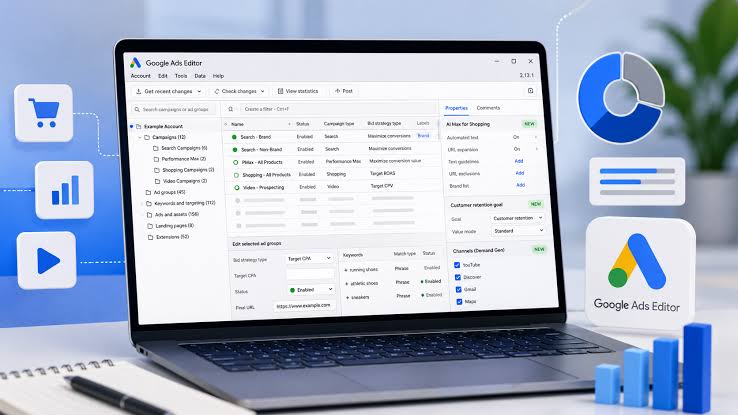
Google Ads Editor 2.13 rolled out AI Max for Shopping campaigns and Customer Retention Goals for Performance Max on 24 July 2026. The Shopping AI Max upgrade closes the offline management gap for bulk campaign work; the Retention Goals addition introduces a genuinely new strategic lever for UK ecommerce brands.

Google Ads Smart Bidding Update August 2026 - What UK Advertisers Actually Need to Know
Google Ads is updating how Target CPA and Target ROAS bidding works for campaigns limited by budget on 17 August 2026. Appear Online examines what Google has officially confirmed, why UK campaigns currently overperform their targets, which UK advertisers face highest exposure, and the decision framework for whether to act on your campaigns before the deadline.
Get a FREE Website Audit
Dominate search results and attract more qualified traffic. Our free search performance audit will analyse your website's visibility across all major search engines and provide actionable insights to improve your online presence.

