


.avif)

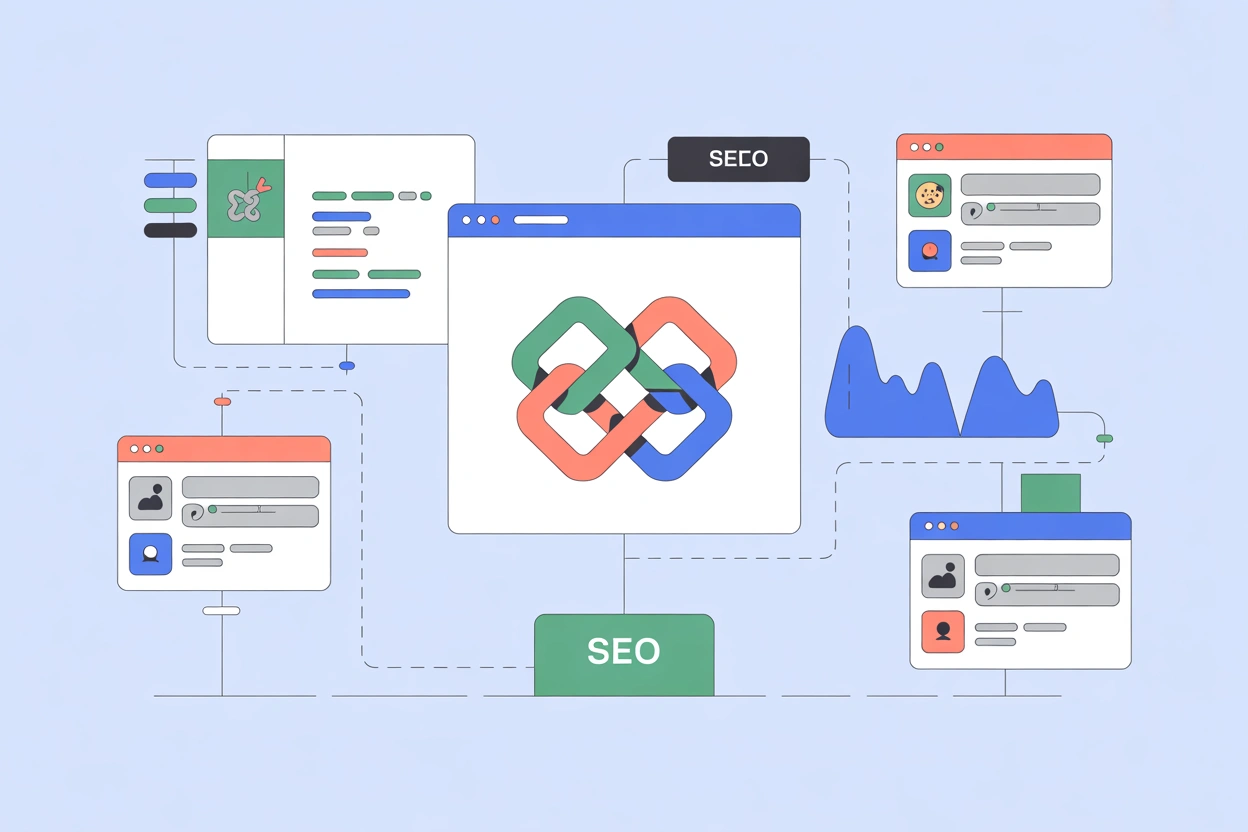
Link farms are one of the oldest manipulation tactics in SEO, yet they continue to surface in modern campaigns, often disguised behind new language, tools, or networks. Despite years of algorithm updates and clearer guidance from search engines, many brands still end up associated with link farms, sometimes without realising it.
In an AI-driven search environment, the risk has increased. Link farms no longer just threaten rankings. They undermine trust signals, distort entity understanding, and can permanently damage how a brand is interpreted by both search engines and AI systems.
This article explains what link farms really are, how they operate today, why they are harder to detect than they appear, how AI search changes the consequences, and how to recover safely if your site has been affected.
If you need a link profile audit focused on trust, not just metrics, Appear Online can help.
What a link farm actually is
A link farm is a network of websites created primarily to generate links rather than serve users. These sites exist to pass perceived authority between each other, inflate link counts, and manipulate ranking signals.
Early link farms were obvious. They featured thin content, endless outbound links, and little real purpose. Modern link farms are more subtle. They often look like blogs, news sites, directories, or industry resources, but their primary function is still link distribution.
Key characteristics of link farms include:
- Content created to support links rather than users
- High volumes of outbound links across unrelated topics
- Reused templates and structures across multiple domains
- Minimal brand identity or audience engagement
- Patterns of reciprocal or networked linking
The presence of content does not make a site legitimate. Intent matters more than appearance.
Why link farms still exist
Link farms persist because they exploit a gap between what looks acceptable on the surface and what search systems actually value.
They offer speed. Links can be placed quickly. They offer scale. Dozens or hundreds of links can be created cheaply. They offer simplicity. No editorial standards or real relationships are required.
For agencies under pressure to deliver metrics, link farms can appear tempting. For clients unfamiliar with link quality, volume can look like progress.
The problem is that modern search systems are far better at identifying patterns than they were in the past.
How link farms have evolved
Today’s link farms are rarely obvious networks of spam sites. They are often presented as:
- Private blog networks dressed as niche publications
- Generic news sites covering every industry imaginable
- Guest post networks with minimal editorial oversight
- Regional blogs with no real local presence
They often have metrics that appear respectable. Domain authority scores, indexed pages, and surface-level traffic can all be misleading.
What gives them away is not a single signal, but a pattern of behaviour.
How search engines detect link farms
Search engines do not evaluate links in isolation. They look at relationships.
Signals that raise concern include:
- Repeated linking patterns across the same domains
- Sudden spikes in similar anchor text
- Links placed in low-engagement content
- Sites that exist primarily to link out
- Networks with shared infrastructure or ownership
Once a pattern is identified, the value of those links drops sharply. In some cases, they become liabilities rather than assets.
Why link farms are riskier in AI-driven search
AI systems do not just count links. They assess credibility.
When a brand is consistently associated with low quality or artificial sources, AI systems learn the wrong context. Instead of seeing a brand as authoritative, they may classify it as manipulative or unreliable.
This has several consequences:
- Reduced the likelihood of being cited or summarised
- Increased scepticism in AI-generated responses
- Diluted topical relevance
- Long-term damage to the entity trust
Unlike manual penalties, these effects are difficult to diagnose because they manifest as absence rather than action. The brand simply stops appearing.
Link farms versus legitimate link building
Not every site that accepts guest content is a link farm. The difference lies in intent, standards, and relevance. The difference is structural, not cosmetic.
The table below outlines key differences between link farms and legitimate editorial placements.
Common ways brands end up in link farms
Many brands do not knowingly choose link farms. They arrive there through shortcuts.
Common paths include:
- Low-cost link packages promising guaranteed results
- Agencies focused on volume-based KPIs
- Automated outreach tools with no vetting
- Legacy links built years ago and forgotten
Once links exist, they continue to influence how a brand is perceived unless addressed.
How to identify link farm exposure
Auditing link profiles requires more than checking metrics.
Warning signs include:
- Large numbers of links from sites with no clear audience
- Repeated templates or content structures
- Articles that exist solely to host outbound links
- Irrelevant industry associations
- Sudden growth without corresponding brand activity
Context matters. A small number of weak links is rarely a problem. A pattern is.
How to recover from link farm links safely
Recovery should be measured, not reactive.
The first step is classification. Separate clearly manipulative links from merely low-value ones. Not all weak links require action.
Next, prioritise removal or disavowal where risk is clear. Focus on patterns rather than individual domains.
At the same time, rebuild trust signals. This means earning links and mentions from real, relevant sources that reinforce the correct context.
Most importantly, avoid overcorrection. Aggressive disavowing can do more harm than good.
Preventing future link farm risk
Prevention is simpler than recovery.
- Set clear link quality standards.
- Prioritise relevance over metrics.
- Evaluate sites based on audience and intent.
- Avoid networks and shortcuts.
Link building should support brand credibility, not just rankings.
FAQs about link farms
Are link farms always penalised?
Not always immediately. Often their impact is neutralised rather than punished.
Can a few bad links ruin a site?
No. Patterns cause problems, not isolated links.
Should all low-quality links be removed?
No. Focus on manipulative intent, not perceived weakness.
Do link farms still work?
Short-term gains are possible. Long-term risk is high.
Final takeaway
Link farms are no longer just an outdated SEO tactic. In an AI-driven search environment, they are a credibility risk.
Brands that associate themselves with artificial link networks undermine their own trust signals, even if rankings appear stable in the short term. Sustainable visibility comes from real relationships, real relevance, and real authority.
References:
https://developers.google.com/search/docs/appearance/core-updates
Related blog posts
How to Audit Your Current Link Building Agency's Work
A practical guide to auditing your link building agency. Covers a six-pillar framework, a five-tier link quality grading system, cost benchmarks for UK link building in 2026, common red flags and what to do with your findings.

What Is Broken Link Building? A Complete Guide for 2026
A complete guide to broken link building in 2026. Covers the full process, three proven prospecting approaches, the tools you need, outreach best practices and how AI search has changed what works.
Spammy Links and SEO Risk
This guide explains what spammy links are, why they damage SEO and AI trust, how penalties work in 2026, and how to recover safely without creating long term risk.
Why Your Backlinks Aren’t Improving Rankings
If you’ve invested in backlinks but your rankings haven’t improved, this guide explains why. Discover what Google truly values in 2025, how to audit your link profile, and how to turn wasted backlinks into measurable SEO performance.
How to Identify and Neutralise Toxic Links
This article breaks down what toxic links are and provides a step-by-step guide to a link audit and a disavow strategy.

Understanding and Leveraging Link Equity
Demystify link equity and learn how this crucial SEO concept influences your website's ranking.
Get a FREE Website Audit
Dominate search results and attract more qualified traffic. Our free search performance audit will analyse your website's visibility across all major search engines and provide actionable insights to improve your online presence.

