


.avif)

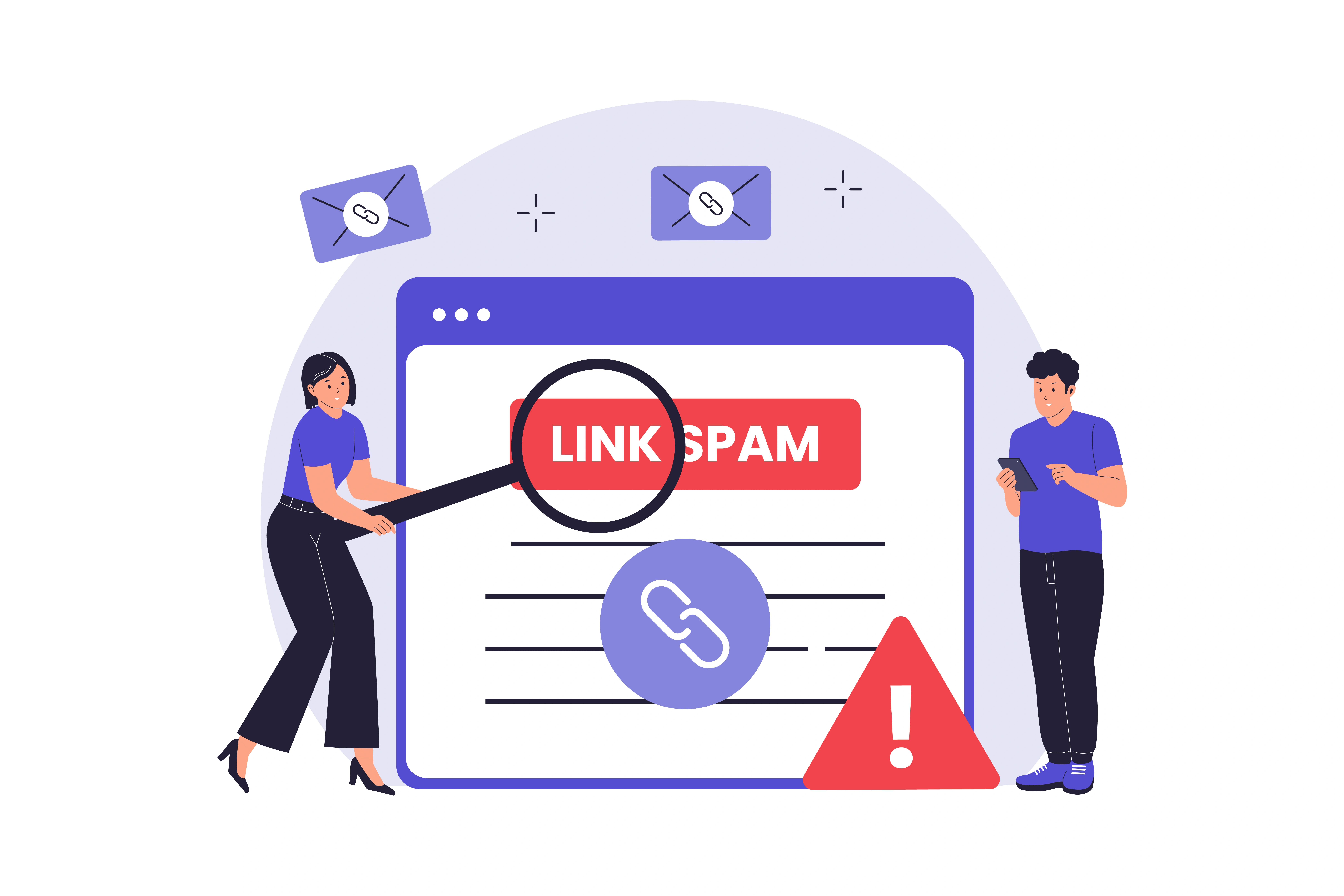
Spammy links remain one of the most persistent causes of long-term SEO damage. While search engines have become better at discounting low-quality backlinks, links that are clearly manipulative still pose a serious risk. In 2026, that risk extends beyond rankings into trust, entity authority, and whether AI systems are willing to cite or surface your brand at all.
This guide explains what spammy links actually are, why businesses continue to fall for them, how penalties work today, how to recover safely, and why AI-driven search has raised the stakes significantly.
What Are Spammy Links
Spammy links are backlinks created primarily to manipulate search performance rather than to provide genuine editorial value. They are not earned through relevance or authority and usually exist solely to influence algorithms.
Common examples include paid links without disclosure, private blog networks, mass guest posting on low-quality sites, irrelevant directories, forum profile links, comment spam, link injections on hacked sites, and automated link schemes.
Spam is defined by intent, pattern, and scale. A single poor-quality link rarely causes harm. Repeated or systematic manipulation does.
Why Spammy Links Still Work Just Enough to Be Dangerous
One of the reasons spammy links persist is that they sometimes appear to work in the short term. Rankings may lift temporarily, particularly in low competition niches or before algorithms catch up.
This creates a false sense of validation. Businesses see movement and assume the tactic is effective, not realising that they are accumulating long-term risk.
Short-term gains often mask future suppression.
Why Businesses Fall for the Trap
Spammy links are rarely built with malicious intent by the business itself. Most cases fall into one of the following scenarios:
- An agency promises fast results with vague explanations
- Link building is outsourced with little oversight
- A legacy SEO campaign from years ago used outdated tactics
- A business owner buys links directly without understanding the risk
- Pressure to show quick ROI overrides long-term strategy
The common factor is incentive misalignment. Speed is prioritised over sustainability.
Why Spammy Links Are More Dangerous in AI-Driven Search
Traditional search engines primarily evaluated links as ranking signals. AI-driven systems evaluate them as trust signals.
Large language models and generative search systems assess brand credibility across multiple dimensions, including backlink patterns. A site with a manipulative link profile signals unreliability.
This can lead to:
- Reduced the likelihood of being cited in AI summaries
- Lower confidence in entity accuracy
- Increased hallucination risk
- Suppression in AI-assisted answers, even when rankings appear stable
In other words, spammy links can quietly remove you from the AI layer of search without an obvious penalty.
Real World Spammy Link Patterns
The table below shows common spam patterns and why they raise risk flags.
How Search Engines Penalise Spammy Links Today
Penalties no longer always look like sudden drops.
Algorithmic Suppression
This is the most common outcome. Rankings stagnate, recovery after updates becomes difficult, and visibility declines gradually.
Manual Actions
Manual penalties involve explicit actions that require cleanup and reconsideration. These are rarer but more severe.
In AI search, penalties may appear as an absence rather than a loss. The site simply stops being referenced.
How to Diagnose a Spammy Link Problem
Signs include ranking volatility, sudden drops without technical cause, loss of AI visibility, weak recovery after updates, or competitors overtaking despite weaker content.
Manual action notices are obvious, but most cases remain algorithmic.
Regular backlink audits are essential even for sites that have never intentionally built links.
How to Recover Without Making Things Worse
Recovery requires restraint.
Effective recovery includes:
- Full backlink audit with intent classification
- Identifying links that clearly violate quality guidelines
- Attempting removals where feasible
- Using disavow files conservatively
- Avoiding mass disavow based on metrics alone
- Strengthening trust signals elsewhere on the site
Disavowing everything often causes more harm than good.
Recovery Is Not Just About Links
Link cleanup alone is rarely enough. Recovery improves faster when combined with:
- Clear internal linking
- Strong entity signals
- Improved content quality
- Legitimate editorial mentions
- Brand authority reinforcement
AI systems evaluate the full picture.
Spammy Links vs Low Quality Links
Not all weak links are dangerous.
Why Spammy Links Damage Long-Term Performance
Spammy links reduce confidence in a brand’s credibility. Over time, this limits ranking potential, weakens AI trust signals, and increases volatility.
Trust once lost is slow to rebuild.
FAQs
Can spammy links still work short-term?
Sometimes, but they almost always fail long-term.
Should every suspicious link be disavowed?
No. Only links that clearly indicate manipulation.
How long does recovery take?
Typically, several months, sometimes longer.
Do spammy links affect AI-generated answers?
Yes. They reduce trust and citation likelihood.
Can competitors hurt me with spam links?
Negative SEO is rare but possible. Monitoring matters.
Final Thoughts
Spammy links are no longer just an SEO risk. They are a brand trust risk.
As AI-driven search prioritises credibility, consistency and accuracy, backlink quality matters more than ever. Sustainable SEO is built through relevance and authority, not shortcuts.
References:
Related blog posts
How to Audit Your Current Link Building Agency's Work
A practical guide to auditing your link building agency. Covers a six-pillar framework, a five-tier link quality grading system, cost benchmarks for UK link building in 2026, common red flags and what to do with your findings.

What Is Broken Link Building? A Complete Guide for 2026
A complete guide to broken link building in 2026. Covers the full process, three proven prospecting approaches, the tools you need, outreach best practices and how AI search has changed what works.
Link Farms - Why They Still Exist and Why They Are More Dangerous Than Ever
A practical guide to link farms, how they damage rankings and AI trust, and how brands can identify and recover from risky links.
Why Your Backlinks Aren’t Improving Rankings
If you’ve invested in backlinks but your rankings haven’t improved, this guide explains why. Discover what Google truly values in 2025, how to audit your link profile, and how to turn wasted backlinks into measurable SEO performance.
How to Identify and Neutralise Toxic Links
This article breaks down what toxic links are and provides a step-by-step guide to a link audit and a disavow strategy.

Understanding and Leveraging Link Equity
Demystify link equity and learn how this crucial SEO concept influences your website's ranking.
Get a FREE Website Audit
Dominate search results and attract more qualified traffic. Our free search performance audit will analyse your website's visibility across all major search engines and provide actionable insights to improve your online presence.

