


.avif)

The rise of generative search - from Google AI Mode to ChatGPT Search, Perplexity, Claude and Bing Copilot - has fundamentally altered how content gets discovered. Traditional SEO metrics like rankings, traffic, and click-through rates remain useful, but they no longer tell the full story. In the era of AI-driven answers, visibility often happens inside the AI engine rather than on a search results page.
To stay competitive, SEO and marketing teams need to evolve their measurement frameworks. Below are the primary KPIs becoming critical for any brand optimising for AI search dominance - and how to track them effectively.
Get in touch with our team today to discuss our AI SEO services.
Core AI-SEO Metrics to Track
As AI-powered search continues shifting from link-based ranking to answer-based retrieval, measurement frameworks must evolve. The metrics below represent the new benchmarks for visibility, trust and commercial impact across AI search environments. Instead of only tracking rankings and traffic, these KPIs monitor how often AI systems recognise, reference and rely on your content.
Why These KPIs Are Becoming Critical
Traditional SEO metrics like click-throughs and keywords still matter - but not all AI searches lead to clicks. As AI engines increasingly handle discovery - summarising content or responding directly - visibility doesn’t always translate to site traffic. Performance must be measured by how often AI systems trust and use your content.
- Snippet win-rate shows how often your content is selected as the “instant answer.”
- Entity recognition ensures your brand is consistently identified, reducing the risk of misattribution.
- Citation frequency builds reputation - each reference inside an AI answer boosts long-term authority.
- Content-assisted conversions link AI visibility to revenue, closing the gap between exposure and performance.
In short: being seen is no longer enough. Being trusted and used by AI is now the real benchmark.
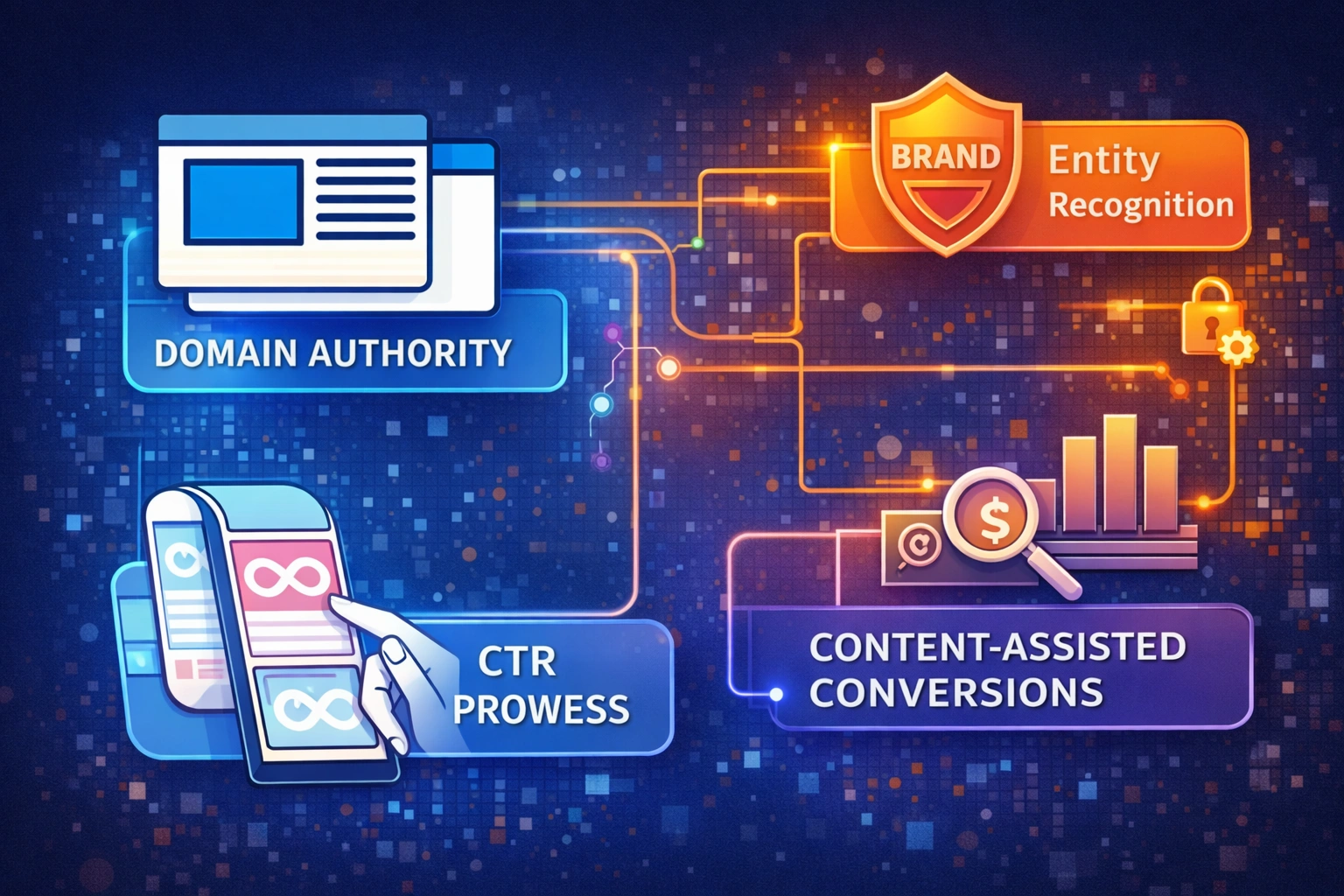
What Shifts When AI Behaviour Changes: The New Funnel
The move toward AI-first discovery requires a new funnel model for SEO and content strategy.
- Top-of-Funnel (Awareness): AI overview inclusion, snippet wins, entity impressions.
- Mid-Funnel (Engagement): Citations, branded queries, entity-based visibility, share of voice metrics.
- Bottom-of-Funnel (Conversion): Content-assisted conversions, brand reach through AI, referral attribution.
Tracking across all funnel stages helps you understand how AI-powered search impacts real business goals.
Challenges in Measuring AI KPIs
These metrics bring benefits - but also new measurement challenges:
- AI visibility is often zero-click, making traditional click-based analytics underrepresent success.
- Many AI platforms do not expose detailed referral or source-tracking metadata.
- Attribution becomes complex when content is summarised rather than linked.
- Competitive tracking requires frequent manual or tool-based monitoring across multiple AI engines.
Brands must combine qualitative tracking (manual checks, prompt testing) with quantitative data (analytics, conversion tracking) to build a reliable dataset.
Next Steps: Building Your AI KPI Dashboard
To effectively monitor your AI performance, consider:
- Listing target queries where you expect AI-driven discovery (informational + commercial intent).
- Setting up periodic AI prompt audits to test visibility - manually or via tools.
- Tracking citation occurrences across platforms - note date, format, and output type.
- Integrating conversion tracking (UTMs, CRM attribution) for visits referred from AI tools.
- Logging entity signals - schema compliance, consistent naming, knowledge-graph presence.
- Comparing the competitor share of AI visibility to the benchmark presence.
A well-structured dashboard combining these metrics gives a more complete picture of how your content performs in AI-first search than traditional SEO dashboards ever could.
How to Track the New AI SEO KPIs
Each KPI requires a different approach to measurement because AI search engines do not provide a unified analytics layer. Tracking must combine manual audits, tool-based monitoring and structured attribution.
Below you will find a complete walkthrough of how to measure each KPI and which signals matter most.
Snippet Win Rate: How to Measure It
Snippet win rate reflects how often your pages are selected as the short answer inside AI summaries or featured style responses. Since AI outputs vary by platform, tracking requires a mix of automated checks and controlled prompt tests.
You can measure snippet win rate by:
- Running scheduled prompt audits for your target query list.
- Recording when your page appears as the extracted source.
- Tracking which content formats win the most responses.
- Identifying patterns in paragraphs, lists or definitions.
- Logging changes when updates are made to the content.
Snippet win rate usually improves when content follows structured formatting, uses clear definitions and addresses the exact intent of the question.
AI Overview Inclusion Rate: How to Measure It
AI Overview inclusion tracks how often your website appears inside generative summaries produced by Google AI Mode or similar features on other platforms. This is one of the strongest indicators of top-of-funnel visibility in AI ecosystems.
Ways to track it include:
- Monitor target queries weekly or monthly.
- Logging presence inside the AI-generated overview.
- Recording whether your website is cited or only referenced indirectly.
- Testing variations of the same query to reveal coverage patterns.
- Tracking competitor inclusion for benchmarking.
A strong inclusion rate suggests AI systems consider the content reliable, well-structured and closely aligned with the query intent.
Entity Recognition and Authority Index: How to Measure It
Entity recognition measures whether AI search engines identify your brand, organisation or topic as a known and stable entity. This KPI is critical because it influences whether your content is selected, cited or avoided.
You can track entity recognition through:
- Structured testing where you ask AI systems to describe your brand.
- Checking whether the model misunderstands, merges or confuses your entity.
- Verifying consistent naming across Google, Bing, LinkedIn and schema.
- Monitoring changes when entity-based content is updated.
- Logging whether the model references accurate or outdated details.
A strong entity score reduces hallucination risk and improves the consistency of your presence inside AI-generated outputs.
Content Assisted Conversion Rate: How to Measure It
Content-assisted conversions measure the business impact of AI-driven visibility. Even when AI results do not produce a direct click, they can influence the user journey.
You can track these conversions using:
- Assisted conversion reporting inside analytics platforms.
- Post-click paths that originate from brand search queries.
- UTM structures for AI-driven referral sources are available.
- CRM match-back for leads influenced by AI content exposure.
- Surveys for high-value conversions that ask how users discovered you.
This metric allows SEO teams to connect AI visibility with revenue and demonstrate commercial value.
Citation and Reference Frequency: How to Measure It
Citation frequency measures how often AI systems link directly to your content or mention it as part of an answer. This KPI reflects trust and authority.
You can measure citation frequency by:
- Running prompt tests on your target keyword clusters.
- Recording whenever your content appears in citation slots.
- Tracking citation format changes across platforms.
- Benchmarking competitor citation counts.
- Monitoring when citations appear after publishing updates.
A high citation rate indicates strong factual clarity, stable structure and reliable entity grounding.
Share of Voice in AI Results: How to Measure It
Share of voice compares your AI visibility to competitor visibility. It reflects competitive strength inside AI-powered search environments.
To measure it:
- Create a controlled list of target keywords.
- Run the same AI visibility tests for each competitor.
- Score presence, citations and snippet wins.
- Assign visibility weights based on output type.
- Summarise brand share across all queries.
Share of voice reveals which brands are dominating in AI search and where opportunities exist.
Time to Index and Update Recognition: How to Measure It
Time to index measures how quickly AI systems notice and use your new or updated content. This metric highlights the health of your structured data, discoverability and clarity.
You can track update velocity by:
- Publishing a dated change to a monitored page.
- Running prompt tests daily until the update appears in AI answers.
- Checking structured data validation and entity connections.
- Reviewing crawl frequency inside Google Search Console.
Shorter recognition time indicates strong machine readability and trust.
KPI to Objective Mapping Table
Below is a table showing how each AI KPI aligns with core business objectives. This helps teams prioritise based on commercial goals and industry context.
This table is designed to help decision makers understand why each KPI matters and how it drives specific outcomes. It turns AI metrics into an actionable business strategy.
Request a complete AI KPI audit to benchmark your current performance and identify opportunities for rapid improvement.
Frequently Asked Questions
How are AI KPIs different from traditional SEO metrics?
Traditional SEO focuses on rankings, organic traffic and click behaviour. AI-driven search prioritises selection, trust and factual clarity inside generative responses. AI KPIs measure how often your content is recognised, cited or used within AI answers rather than how often it receives clicks.
Do higher rankings still matter in an AI-first search environment?
Yes, but they are not the primary driver of visibility. AI results often bypass the click stage entirely. Ranking helps with indexing and discoverability, but AI selection depends more on entity clarity, structure, citation value and factual grounding.
How often should AI KPIs be measured?
Most brands measure them monthly. High competition industries or fast-moving categories may require weekly checks. AI systems update frequently, and visibility patterns can shift quickly, so ongoing monitoring is recommended.
How do I know if AI visibility is influencing conversions?
You can track this through assisted conversion reporting, brand search uplift, CRM matchback and controlled attribution models. When content appears in AI answers, users often convert later through direct search or branded queries.
What tools are required to track AI KPIs?
You can use a mix of analytics platforms, prompt-based testing, schema validation tools, competitive monitoring systems and manual audits. No single tool currently covers all AI KPI categories, so a hybrid workflow achieves the most accurate results.
Which KPI is the most important?
The most important KPI depends on your objective. Visibility-focused brands should prioritise snippet win rate and AI overview inclusion, while accuracy and trust are better measured through entity recognition and citation frequency. Businesses focused on revenue should track content-assisted conversions, and those monitoring competition should focus on share of voice in AI search. Most brands track all AI KPIs but prioritise two or three based on their strategy.
Can small websites compete with larger competitors in AI search?
Yes. AI engines focus more on clarity, factual accuracy, trustworthy entities and well-structured content rather than pure backlink quantity or domain age. Smaller sites can outperform larger ones if their content is more useful for AI retrieval.
How quickly can AI SEO improvements impact KPIs?
Structured updates, schema revisions and entity optimisation can create noticeable changes within a few weeks. Larger content architecture changes usually take one to three months. AI recognition tends to move faster than traditional ranking updates, but it depends on platform variance.
References:
https://search.google/intl/en-GB/ways-to-search/ai-overviews/
Related blog posts

AI Search and Seasonal Trends: How to Win Peak Moments
Why AI search engines treat seasonal trends differently from Google, why last-minute SEO no longer works for peak moments, and the modern 12-month playbook for winning AI search visibility around Black Friday, Christmas and other UK seasonal events.
How to Rank, Optimise and Win on Perplexity AI in 2026
A definitive 2026 playbook for Perplexity AI - how it works, what it rewards, and the exact strategy to earn AI citations and visibility.

The 12 Best UK AI SEO Agencies for 2026
The 12 best UK AI SEO agencies for 2026 - explore the new search landscape, practical AI SEO strategies, and why Appear Online leads the future.

ChatGPT Prompts for SEO and Marketing Teams - The 2026 Strategic Guide
The 2026 strategic guide to ChatGPT prompts for SEO and marketing teams. Covers the anatomy of a good prompt, workflow-organised prompt frameworks for SEO, content, digital PR, local SEO and reporting, advanced techniques, common mistakes and how to integrate ChatGPT into your marketing workflow.

Author Pages and AI Trust - Why Blogs Need Clear Human Signals
A practical guide to author pages, why they matter for AI trust, and how clear authorship improves blog visibility and credibility.

AI Search Optimisation Checklist 2026
AI search is changing how users find businesses. This checklist shows how to optimise for ChatGPT, Google AI, and Perplexity in 2026.
Get a FREE Website Audit
Dominate search results and attract more qualified traffic. Our free search performance audit will analyse your website's visibility across all major search engines and provide actionable insights to improve your online presence.

