


.avif)


Disclaimer: This article is for informational purposes only and does not constitute legal or marketing advice. Outreach activity should comply with UK GDPR, PECR and ASA standards. Tools, platforms and best practices in SEO evolve quickly; verify current functionality and pricing directly with each provider before relying on it for live campaigns.
Introduction
Broken link building is one of the few link acquisition tactics that genuinely works at scale in 2026, because it is built on something most outreach lacks: a real reason for the recipient to reply. You are not asking for a favour. You are pointing out something broken on their site and offering a credible fix. That single dynamic shifts the conversation from a cold pitch to a helpful tip, which is why broken link building still routinely delivers placement rates that pure cold outreach cannot match.
In a search environment increasingly shaped by AI Overviews, ChatGPT, Perplexity and entity-driven ranking signals, the value of editorial links has not gone away. If anything, contextual links from relevant, authoritative pages have become more important because they now feed both classic domain authority and the entity signals AI systems use to decide which brands to surface. Broken link building gives you a structured way to earn those links without paying for placements or producing thin guest posts at scale.
This guide explains exactly what broken link building is, how it works, the tools you need, the approaches that produce real results, and the mistakes that quietly waste months of outreach.
What Is Broken Link Building?
Broken link building is the SEO practice of finding broken outbound links on third-party websites, identifying ones that pointed to content similar to yours, and contacting the site owner to suggest your page as a replacement. It is a subset of link building that focuses on dead links - usually pages returning a 404, dead domains, or pages that have been removed or moved without a redirect.
The mechanism is simple. A blog, resource page or article links out to a source. That source disappears. The link is now broken, but the linking site does not know. You find the broken link, you have (or can quickly create) a relevant equivalent piece of content, and you write to the editor or webmaster letting them know about the dead link and offering your page as a replacement.
When it works, three things happen at once:
- The recipient gets a useful heads-up about a broken link
- You earn a contextual editorial link from a page already discussing your topic
- Both sites benefit from improved user experience
That last point matters more than people realise. A broken outbound link is a small but persistent quality issue for the linking page, especially as Google's helpful content systems and AI ranking models pay closer attention to overall page quality.
Why Broken Link Building Still Works in 2026
It is reasonable to ask whether any link-building tactic from a decade ago still works in 2026. Broken link building does, for four reasons that have not changed.
First, it is genuinely useful. Most outreach asks the recipient to do something for the sender. Broken link outreach gives the recipient something they did not have: information. That mutual benefit lifts response rates significantly.
Second, the links are contextually relevant. By definition, the linking page is already talking about your topic. That contextual relevance is one of the strongest signals modern search systems use, far stronger than raw domain rating.
Third, the supply of broken links is constant. Domains expire daily. Site restructuring. Companies pivot. WordPress plugins fail. The internet decays at an enormous rate, and every dead page is a potential link opportunity for someone with a credible replacement.
Fourth, broken link signals are also AI search signals. When you earn a contextual link from a respected publication, you reinforce the entity associations AI models build around your brand. Each genuine, contextual link strengthens your case for inclusion in AI-generated shortlists and answers - something we cover in more detail in our guide to AI ranking signals.
How Broken Link Building Works: The Process at a Glance
Most successful broken link campaigns follow the same six phases. The exact tools and tactics inside each phase change as the SEO landscape evolves, but the structure is durable.
The biggest mistake in this process is rushing phases 3 and 4. A link request without genuine content fit is far worse than no request at all, both because it will fail and because it puts your domain on editors' "ignore" list.
Types of Broken Links You Can Target
Not all broken links are equal. Some are easier to win replacement links on than others, and some carry more SEO value when the placement lands.
Dead domains and restructured domains are usually the most productive targets, because a single broken destination might be linked from dozens or hundreds of pages. Find the right replacement content, and you can earn multiple links from one piece of research.
Tools You Need for Broken Link Building
You do not need every tool on the market. You do need at least one in each category. Many campaigns can run effectively on a combination of free tools plus one paid SEO platform.
For small or first-time campaigns, a free browser extension, the Wayback Machine, plus a Hunter trial will get you a long way. For larger programmes, you will quickly want a paid backlink platform and proper outreach tooling.
Three Approaches to Finding Broken Link Opportunities
There is no single "right" way to find broken links. The three approaches below are the most reliable, and most experienced link builders combine all three.
Approach 1: Competitor backlink analysis
Take your top three to five competitors, pull their backlink profiles, and filter for broken inbound links. Tools like Ahrefs and Semrush expose this directly. The advantage is that these links sit on pages already discussing your topic, often in resource lists or roundups, and you already have a credible alternative - your own equivalent page.
Approach 2: Resource page hunting
Resource pages are curated lists of links on a specific topic, such as "best B2B marketing tools" or "essential resources for new freelancers". They are particularly link-rich and, because they are rarely updated, tend to accumulate broken links over time. Search operators like intitle:"resources" "your topic" or inurl:resources "your topic" are useful starting points. Once you find a resource page in your niche, check every outbound link for broken links.
Approach 3: Niche broken link mining
Identify a specific dead resource that lots of sites used to link to - a product that was discontinued, a company that shut down, a popular guide that was deleted. Search for sites linking to that dead URL, ideally using a backlink tool to filter by referring domain. This approach scales beautifully because one broken target can yield dozens of replacement opportunities.
Matching Replacement Content: The Wayback Machine Step
This is the step most amateur campaigns skip, and it is exactly the step that separates a 2% reply rate from a 25% one.
When you find a broken link, the linking page is referencing something specific. You need to know what that something was before you can credibly suggest a replacement. The Internet Archive's Wayback Machine lets you view historical snapshots of dead pages. Pull up the most recent live snapshot of the dead URL and ask:
- What was the original topic, angle and depth?
- Was it a tool, an article, a study, a tutorial?
- Does your page cover the same intent at a similar or better depth?
If the answer is yes, you have a legitimate replacement and can pitch confidently. If the answer is no, do not pitch. Either build a fitting replacement or move on to the next opportunity. Pitching a misfit page is the fastest way to burn your domain reputation with editors.
Outreach: How to Actually Get Replies
The single biggest factor in broken link outreach success is the email itself. The goal of the opening message is not to win the link. It is to get a reply. Once the recipient is engaged, the link follows naturally.
Strong broken link outreach emails share five characteristics:
- They identify the recipient by name and role
- They reference the specific page with the broken link
- They name the exact broken URL so the recipient can verify in seconds
- They explain what the original content was and offer the replacement clearly
- They do not oversell or include marketing language
A single follow-up after five to seven business days is generally appropriate. Beyond that, you are spamming.
A note on UK GDPR and PECR: business-to-business outreach to named individuals at corporate email addresses is generally lawful in the UK, but you should respect opt-outs immediately, never harvest emails at scale without a legitimate interest assessment, and avoid sending to generic addresses where a clear individual is not identifiable. The Information Commissioner's Office provides clear guidance.
Common Mistakes in Broken Link Building
Most failed broken link campaigns fail for predictable, avoidable reasons. The table below covers the most common mistakes and what to do instead.
Broken Link Building vs Other Link Building Tactics
Broken link building is one tool in a wider link acquisition toolkit. It is rarely the only thing you should be doing, but it earns its place when compared against other tactics on volume, quality and effort.
Broken link building sits in a useful middle ground: relevant, sustainable, lower-risk, and ideal for filling gaps between bigger digital PR pushes.
What Results Should You Expect?
Realistic broken link campaigns produce realistic outcomes, not headline-grabbing numbers. The benchmarks below reflect what well-run UK campaigns typically achieve. Note that this aligns roughly with general SEO timelines, which we cover in our guide to how long SEO takes to work.
- Reply rates between 8% and 25%, depending on the quality of fit and personalisation
- Conversion-to-link rates between 2% and 10% of total outreach sent
- A typical 90-day campaign produces between 8 and 30 contextual editorial links
- Diminishing returns over time on a single niche, after which you need to refresh prospect lists
Quality matters more than volume. Ten contextual links from genuinely relevant sites outperform a hundred low-relevance placements every time.
How AI Search Has Changed Broken Link Building
AI search has changed both sides of the broken link equation. On the discovery side, AI tools can accelerate prospecting, draft initial outreach copy, summarise the original content from Wayback Machine snapshots, and cluster opportunities by topic. A task that previously took five hours can sometimes take ninety minutes.
On the outreach side, the bar has moved. Editors receive far more outreach than they used to, and the floor for "generic AI-written email" is now obvious to anyone in publishing. The differentiator is no longer volume of outreach. It is a genuine fit, accurate context and a credible replacement page.
Importantly, broken link building still contributes to the same modern ranking signals that matter for AI visibility:
- Editorial, contextual links from topically relevant pages
- Brand entity reinforcement on pages already discussing your niche
- Anchor diversity that looks like organic editorial linking
- Co-citation and co-occurrence signals around your brand
So while the tactic is old, its outputs feed the newest layer of search visibility. A well-run programme contributes meaningfully to AI search performance, not just classic Google rankings.
Frequently Asked Questions
Is broken link building still white-hat in 2026?
Yes. Broken link building is fully compliant with Google's webmaster guidelines because you are offering a genuine, relevant replacement to a page already linking out on the topic. The link is editorially placed by the site owner, not bought or coerced.
How many broken links should I aim for per month?
There is no fixed number. A focused, quality-led campaign producing five to ten contextual placements per month is usually more valuable than a high-volume effort producing fifty low-relevance links. Match volume to your topical authority strategy, not to vanity metrics.
Can I do broken link building without paid tools?
Yes, especially for early campaigns. The Wayback Machine, free Chrome extensions and Hunter's free tier will get a small campaign off the ground. Paid backlink tools become valuable when you need to scale beyond a handful of campaigns per quarter.
Does broken link building work for ecommerce?
Yes, particularly when you have category and buyer-guide content that can replace dead resource pages. Pure product pages are harder to use as replacement links unless the broken target was also a product page. Build supporting editorial assets, and your broken link opportunities expand significantly.
Is broken link building suitable for regulated industries like healthcare or finance?
Yes, with discipline. Replacement content must meet the editorial and regulatory standards of the linking publication. Some publishers will have stricter sourcing requirements for YMYL content, which means your replacement page needs visible expertise signals, author bios and credible citations.
How is broken link building different from digital PR?
Digital PR earns coverage on news and editorial sites through stories, data and expert commentary. Broken link building targets existing pages with dead links and offers a like-for-like replacement. The two are complementary: digital PR is more powerful at the top of the authority funnel, and broken link building is excellent for sustained contextual link growth.
Should small businesses bother with broken link building?
Yes, especially if you can dedicate a few hours a week or work with a specialist. The technique scales down well, requires no large budget, and produces durable improvements in domain authority over time.
If you want help running a broken link building campaign or auditing your current backlink profile, you can book a consultation or request a website audit.
References:
https://developers.google.com/search/docs/essentials
https://developers.google.com/search/docs/fundamentals/creating-helpful-content
https://www.gov.uk/data-protection
https://ico.org.uk/for-organisations/direct-marketing-and-privacy-and-electronic-communications/
https://www.legislation.gov.uk/uksi/2003/2426/contents
https://search.google/intl/en-GB/ways-to-search/ai-overviews/
https://searchengineland.com/guide/ymyl
Related blog posts
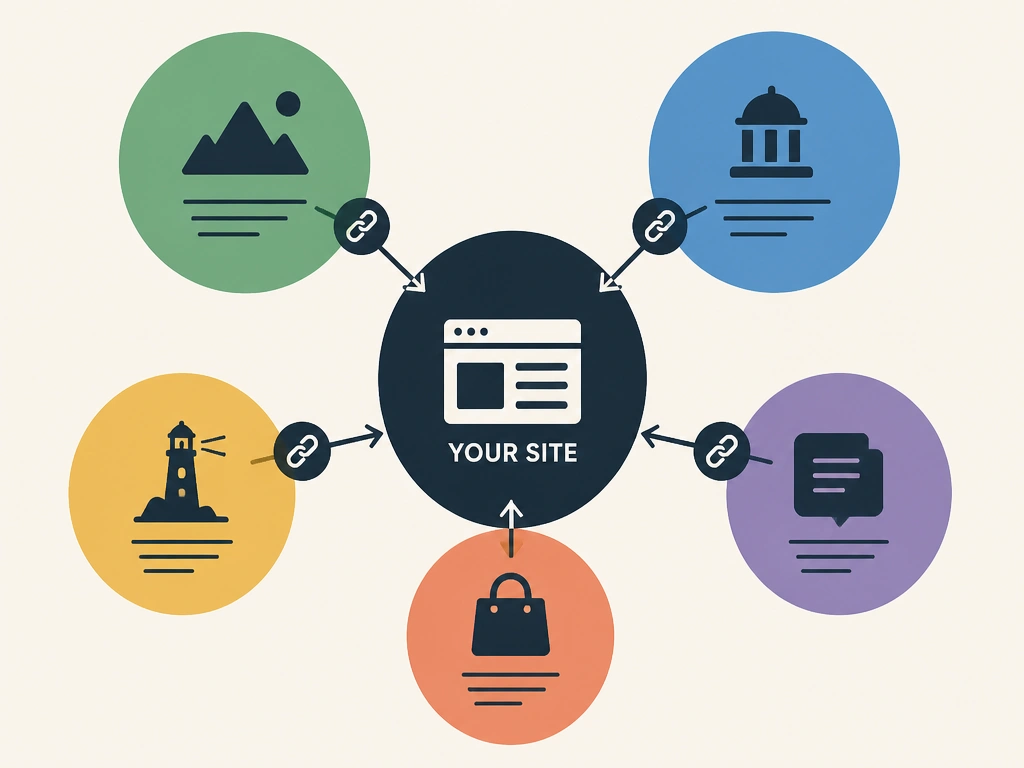
How to Audit Your Current Link Building Agency's Work
A practical guide to auditing your link building agency. Covers a six-pillar framework, a five-tier link quality grading system, cost benchmarks for UK link building in 2026, common red flags and what to do with your findings.
Link Farms - Why They Still Exist and Why They Are More Dangerous Than Ever
A practical guide to link farms, how they damage rankings and AI trust, and how brands can identify and recover from risky links.
Spammy Links and SEO Risk
This guide explains what spammy links are, why they damage SEO and AI trust, how penalties work in 2026, and how to recover safely without creating long term risk.
Why Your Backlinks Aren’t Improving Rankings
If you’ve invested in backlinks but your rankings haven’t improved, this guide explains why. Discover what Google truly values in 2025, how to audit your link profile, and how to turn wasted backlinks into measurable SEO performance.
How to Identify and Neutralise Toxic Links
This article breaks down what toxic links are and provides a step-by-step guide to a link audit and a disavow strategy.

Understanding and Leveraging Link Equity
Demystify link equity and learn how this crucial SEO concept influences your website's ranking.
Get a FREE Website Audit
Dominate search results and attract more qualified traffic. Our free search performance audit will analyse your website's visibility across all major search engines and provide actionable insights to improve your online presence.

