


.avif)

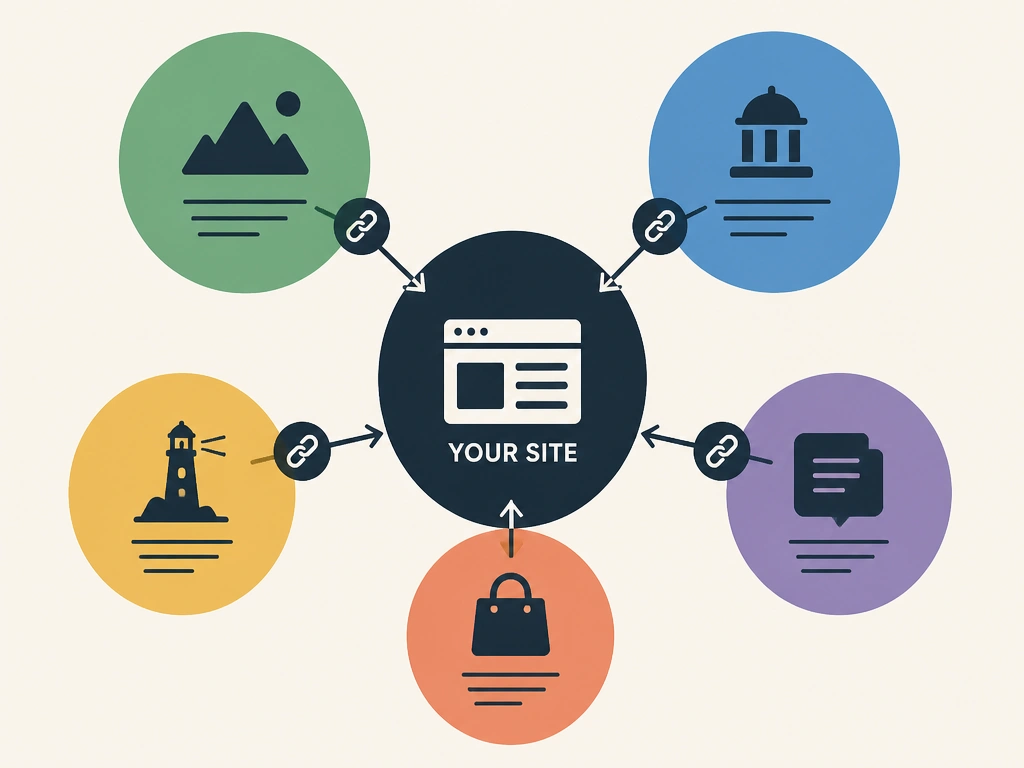
Disclaimer: This article is for informational purposes only and does not constitute legal, contractual or commercial advice. SEO and link-building practices evolve, and tool features and pricing change. Verify any contractual obligations with your current agency before acting on findings from an audit, and consult a professional adviser where appropriate.
Introduction
If you have been paying a link-building agency for six months or more and cannot say with confidence what you have actually received, you are not alone. Many UK businesses sign annual link-building retainers based on a sales pitch and never properly audit the work that follows. Reports get glanced at, monthly calls focus on activity rather than outcomes, and quarterly reviews rarely look beyond surface-level metrics like "links built" and "domain rating".
That is a problem. Link building is one of the most opaque marketing activities a business can pay for, and the gap between a good agency and a mediocre one is enormous. Two agencies charging the same monthly fee can produce wildly different outcomes. One can lift your rankings, fill the funnel and compound domain authority over time. The other can deliver thirty placements on irrelevant blogs, drain your retainer and quietly expose you to a manual penalty that takes years to recover from.
An audit fixes this. It gives you a structured way to evaluate the work, the methodology and the agency itself, so you can either renew with confidence, push for changes or move on. This guide walks you through exactly how to do that, what to look for, what to challenge and what good actually looks like in 2026.
Why Audit Your Link Building Agency at All?
Link building has changed significantly in the last two years. Google's helpful content systems, spam policies and AI-driven ranking signals all pay closer attention to link relevance, editorial context and brand entity reinforcement than ever before. At the same time, AI search engines like ChatGPT, Perplexity and Google AI Overviews increasingly surface vendor shortlists that depend heavily on editorial mentions. The cost of building the wrong kind of links has gone up, and the value of building the right kind has gone up, too.
There are four common scenarios where an audit is essential.
The first is when results have plateaued or declined. If branded search is flat, organic conversions are not moving, and rankings have stagnated despite ongoing activity, something is wrong, and the link profile is usually where the answer lives.
The second is when you are about to renew a contract. A twelve-month renewal is a significant commitment, and the moment before signing is the right time to review what the last twelve months actually produced.
The third is when leadership changes or budget pressure increases. New CMOs and finance teams will both ask what every retainer is delivering, and link building is often the first one questioned because it is the hardest to defend without proper documentation.
The fourth is when you suspect something is off. Recurring placements on the same low-quality sites, links that disappear after a few months, anchor text that feels off-brand or reports that do not reconcile with what is actually live: any of these is reason enough to look properly.
What Good Link Building Should Look Like in 2026
Before you can audit your agency's work, you need to know what good looks like. The benchmarks have moved on from "lots of high DR links", and the agencies that have not adapted are the ones most likely to fail an audit.
Modern link building work should produce contextual, editorial links on pages that are topically relevant to your business, written for human readers and placed where your buyers actually spend time. It should reinforce your brand as an entity across the open web, support specific commercial pages with intent-aligned anchor text and contribute to long-term domain authority rather than chasing short-term ranking bumps. It should also leave a clear trail: real reporting, named placements, traceable outreach and clear logic for why each link was pursued.
A good agency will be able to defend every placement in an audit with a few specific things. They can show you the live link, prove it was earned through legitimate outreach, explain how it supports a target page, and demonstrate it is on a relevant, real publication that is read by people in your category. If they cannot do all four for most of their work, you have a problem worth uncovering.
The Six Pillars of a Link Building Audit
A proper audit covers six pillars. Treat any one of them in isolation, and you will miss something important. The table below summarises the structure, and the rest of this guide walks through each pillar in detail.
Pillar 1: Link Quality
Quality is the most important pillar and the easiest to assess once you know what you are looking at. The goal is to check every recent placement (or a representative sample of fifty if the volume is high) against a consistent set of standards.
Start by pulling the agency's full list of placements for the last six to twelve months. Cross-reference these against your actual backlink profile in Ahrefs, Semrush or Majestic to confirm the links are real, live and indexed. You would be surprised how often reported links never make it into the backlink tools, which means either they were not built, were built and removed, or are on pages that search engines have not crawled.
For each live link, ask the following questions.
- Is the linking page topically relevant to your business or product?
- Is the linking page itself indexed, with organic traffic, on a real site read by real people?
- Is the link contextually placed inside genuine editorial content, not stuffed into an author bio or footer?
- Does the linking site have a coherent editorial identity, not a content farm with fifty unrelated topics?
- Would a human reader land on this page through Google or social search, or only through paid syndication?
Sites that fail these questions are not necessarily harmful, but they offer minimal value. The table below summarises a simple link quality grading system you can apply consistently.
If more than a quarter of your placements over the audit window fall into Tier 4 or below, the agency is not delivering modern link-building work, regardless of what their reports say.
Pillar 2: Quantity vs Spend
Once you have graded link quality, look at volume. Take the total monthly retainer over the audit window and divide by the number of Tier 1 to Tier 3 placements you have received. That gives you an effective cost per quality link, which is the most meaningful metric for comparing value.
The benchmarks below are typical for UK link building in 2026. They vary by industry, competitiveness and agency model, but they are a useful starting point.
If your retainer is £3,000 a month and your effective cost per quality link is £2,500, you are getting one decent placement per month for that spend. That may be acceptable if those placements are tier-one national press, but it is poor value if they are Tier 3 industry blogs.
Pillar 3: Methodology
This pillar is about how the agency actually does the work. Even good-looking placements can hide problematic methods, and an audit is the right moment to ask hard questions about how each link is earned.
The legitimate methods used by reputable agencies in 2026 include digital PR outreach, broken link building, resource page outreach, founder thought leadership, listicle and "best of" inclusions, partner amplification and earned media commentary. Each of these results in editorial decisions by real editors and produces durable, defensible links.
The methods to be cautious of include paid placements that violate Google's policies, link exchanges, networks of sites the agency owns or controls, large-scale spun guest posts and any approach that pays for placements without disclosure. These can deliver short-term lifts but expose the brand to algorithmic devaluation or manual action.
Ask your agency directly: how did you earn each Tier 1 and Tier 2 placement in this audit period? A reputable agency will explain pitch angles, journalist relationships, data assets used and outreach platforms. A weaker agency will be vague or refer to "our network", which is usually the polite name for a PBN or paid placement network.
Pillar 4: Anchor Text and Targeting
A link only helps if it points to the right page with the right anchor. This is where many otherwise decent agencies fall short, because outreach is hard enough without negotiating specific anchors and target URLs, so agencies often default to whatever the publisher accepts.
The two things to audit here are the target URL distribution and the anchor text profile. Pull all the placements in your audit window and tag each by what page it points to and what anchor it uses.
You are looking for three patterns.
First, links should support commercial priority pages, not just the homepage or random blog posts. If 80% of your placements over six months point to the homepage, your service and product pages are not getting any direct ranking support.
Second, anchor text should be diverse but intentional. A natural profile mixes branded anchors, partial-match descriptive anchors, raw URL anchors and a small share of exact-match keyword anchors. A profile dominated by exact-match keywords looks manipulative; a profile that is 100% branded is a wasted opportunity for commercial pages.
Third, the placements should be distributed across your priority pages in proportion to their commercial importance, not randomly scattered.
Pillar 5: Reporting and Transparency
This is the easiest pillar to assess because it is binary. Either the agency provides clear, evidence-based reporting, or it does not.
A good monthly or quarterly report should include:
- A live list of placements with publication name, exact URL, anchor text, target page and date placed
- A traffic and visibility snapshot showing how the placements relate to overall organic performance
- A summary of pitches sent, pitches landed and pitches in progress for digital PR campaigns
- Notes on which placements are tier-one, which are supporting and why
- A clear commentary on what worked, what did not and what the next month will focus on
Reports that show only vague "campaigns delivered" claims, Ahrefs screenshots without context or generic graphs are doing the bare minimum. Reports that include screenshots of email exchanges, pitch threads or outreach platform data are showing real evidence of work, which is a strong positive signal.
Pillar 6: Commercial Outcomes
Finally, the work needs to be tied back to business outcomes. Link building is not the only driver of organic performance, but if the activity has not contributed to measurable improvements over six to twelve months, something is wrong.
Look at the following metrics over the audit window and compare them to the same period the year before:
- Organic traffic to priority commercial pages
- Branded and unbranded organic conversions
- Keyword rankings for your most commercially important target queries
- Domain authority, referring domain count and growth rate
- AI search citations and inclusion in AI-generated shortlists
Reasonable timelines vary, which we cover in our guide to how long SEO takes to work. Within three months, results should be early but visible. By six to nine months, you should see meaningful movement. By twelve months, the link-building investment should be paying for itself in pipeline or revenue uplift.
If none of these metrics has moved despite ongoing link activity, the issue is either link quality, link targeting, or wider site issues that links alone cannot fix. An audit should flag which.
Common Red Flags an Audit Will Reveal
Across hundreds of link-building audits, a few patterns come up again and again. The table below summarises the most common red flags and what each one usually means.
How to Run the Audit: A Practical Workflow
A useful audit can be completed in two to three working days for most businesses. The workflow below is the one we use ourselves.
Start by pulling the placement list from the agency for the last twelve months, including publication, URL, anchor and date. Verify each link against your backlink tool of choice, flagging any that are missing or noindexed.
Next, grade each placement against the five-tier quality system above. Calculate the proportion of Tier 1 to Tier 3 placements versus Tier 4 to Tier 5 placements, and compute the effective cost per quality link.
Then look at anchor text and target URL distribution. Tag each placement by target page and anchor type, and check the distribution against your priority page list and a healthy anchor profile.
After that, run the placements through Ahrefs or Semrush to assess the linking sites' own traffic, indexation and editorial profile. Sites with no organic traffic, no real editorial content or fifty unrelated topics are warning signs.
Then compare commercial outcomes over the audit window to the previous period: organic traffic, conversions, keyword rankings, domain authority growth and AI search visibility.
Finally, compile your findings into a clear summary: what is good, what is acceptable, what is concerning and what is unacceptable. That document is the basis for your conversation with the agency.
What to Do With Your Findings
There are three reasonable outcomes after a thorough audit.
The first is renewal with confidence. If the audit confirms that the agency is delivering quality work, transparent reporting and measurable outcomes, you can renew or expand the relationship knowing you have the evidence to defend the spend internally.
The second is renegotiation. If the work is mixed, talk to the agency directly. Share your findings, ask for explanations and agree on specific changes: higher tier ratio, better target URL coverage, evidence-based reporting, and monthly placement targets at named publications. Many agencies will adapt willingly when challenged with structured feedback. Some will not, and that is informative.
The third is replacement. If the audit reveals systemic problems, opaque methodology or poor commercial outcomes, the right move is to end the relationship and bring in an agency that operates to modern standards. You will find a useful starting point in our guide to the best link-building agencies in the UK.
Whatever you decide, run the audit. The cost of a few days' work is far smaller than the cost of another year of unevidenced link building.
Frequently Asked Questions
How often should I audit my link-building agency?
Annually at minimum, with a lighter quarterly review of placements and outcomes. Audit immediately ahead of contract renewals or after any significant change in ranking performance.
Can I run a link-building audit myself?
Yes. Most of the work involves cross-referencing reports against backlink tools, grading placements and reviewing reporting. Tools like Ahrefs, Semrush and Majestic make the analysis accessible to anyone with SEO familiarity.
What if my agency refuses to provide a placement list?
That is a serious red flag in its own right. Any reputable agency will share a detailed placement list as part of standard reporting. If yours refuses or stalls, treat that as evidence in itself and audit what you can from your own backlink data.
Should I disavow the links the audit flags as risky?
Disavowing should be a last resort and done carefully. Most modern algorithms ignore low-quality links rather than penalising for them, so disavowing is unnecessary in many cases. Reserve it for clearly toxic links, manipulative patterns or after a manual action.
How is auditing a digital PR agency different from auditing a link-building agency?
The principles are the same, but the placement standards are higher. Digital PR audits focus more on tier-one national and trade press, story angles, journalist relationships and earned media outcomes, in addition to the link-level quality checks.
If you want help auditing your current link-building agency, identifying gaps and building a stronger backlink profile, you can book a consultation or request a website audit.
References:
https://ahrefs.com/seo/glossary/link-profile
https://developers.google.com/search/docs/essentials/spam-policies
https://developers.google.com/search/docs/fundamentals/creating-helpful-content
https://ico.org.uk/for-organisations/uk-gdpr-guidance-and-resources/
Related blog posts

What Is Broken Link Building? A Complete Guide for 2026
A complete guide to broken link building in 2026. Covers the full process, three proven prospecting approaches, the tools you need, outreach best practices and how AI search has changed what works.
Link Farms - Why They Still Exist and Why They Are More Dangerous Than Ever
A practical guide to link farms, how they damage rankings and AI trust, and how brands can identify and recover from risky links.
Spammy Links and SEO Risk
This guide explains what spammy links are, why they damage SEO and AI trust, how penalties work in 2026, and how to recover safely without creating long term risk.
Why Your Backlinks Aren’t Improving Rankings
If you’ve invested in backlinks but your rankings haven’t improved, this guide explains why. Discover what Google truly values in 2025, how to audit your link profile, and how to turn wasted backlinks into measurable SEO performance.
How to Identify and Neutralise Toxic Links
This article breaks down what toxic links are and provides a step-by-step guide to a link audit and a disavow strategy.

Understanding and Leveraging Link Equity
Demystify link equity and learn how this crucial SEO concept influences your website's ranking.
Get a FREE Website Audit
Dominate search results and attract more qualified traffic. Our free search performance audit will analyse your website's visibility across all major search engines and provide actionable insights to improve your online presence.

